The essentials
- The Outer Barrier Reef Snorkel and Dive Options from Port Douglas runs for 7.5 hours and is priced from US$223, with an English-speaking live tour guide.[1]
- Agincourt Reef sits about 39 nautical miles, or 72 kilometres, from Port Douglas, right on the outer edge of Australia's continental shelf.[2]
- On reef waters around the region, expect roughly 24°C/75°F in winter and 30°C/86°F in summer, so a light wetsuit or stinger suit is comfortable for most swimmers.[3]
- Marine stinger season in tropical Queensland typically runs from November through to May, when the risk from potentially dangerous jellyfish is higher.[4]
- Commercial reef trips of three hours or more include the Reef Environmental Management Charge of $8.50 per person; shorter part-day trips pay $4.25.[5]
| Port Douglas | Cairns | Whitsundays | |
|---|---|---|---|
| From | from US$223[1] | from US$179[6] | from US$185[7] |
| Duration | 7.5 hours[1] | 8 hours[6] | 10 hours[7] |
| Reef distance | Agincourt Reef 72 km from Port Douglas[2] | Outer reef about 90 minutes by catamaran[8] | Hardy Reef about 80 km east of Airlie Beach[9] |
| Cancellation | Free cancellation up to 24 hours in advance[1] | Free cancellation up to 24 hours in advance[6] | Free cancellation up to 2 days in advance[7] |
the world's largest coral reef system, spanning more than 2,300 kilometres (1,400 miles) along the northeast coast of Australia
A smart, straightforward Port Douglas reef day
On the day
Planning and booking
- Reserve now and pay later to lock in your spot on the Port Douglas outer reef tour.[1]
- Free cancellation is available up to 24 hours in advance for a full refund.[1]
- The reef management charge is $8.50 per person for trips of three hours or more.[5]
- Wear the stinger suit provided during marine stinger season, November to May.[4]
Why dive from Port Douglas
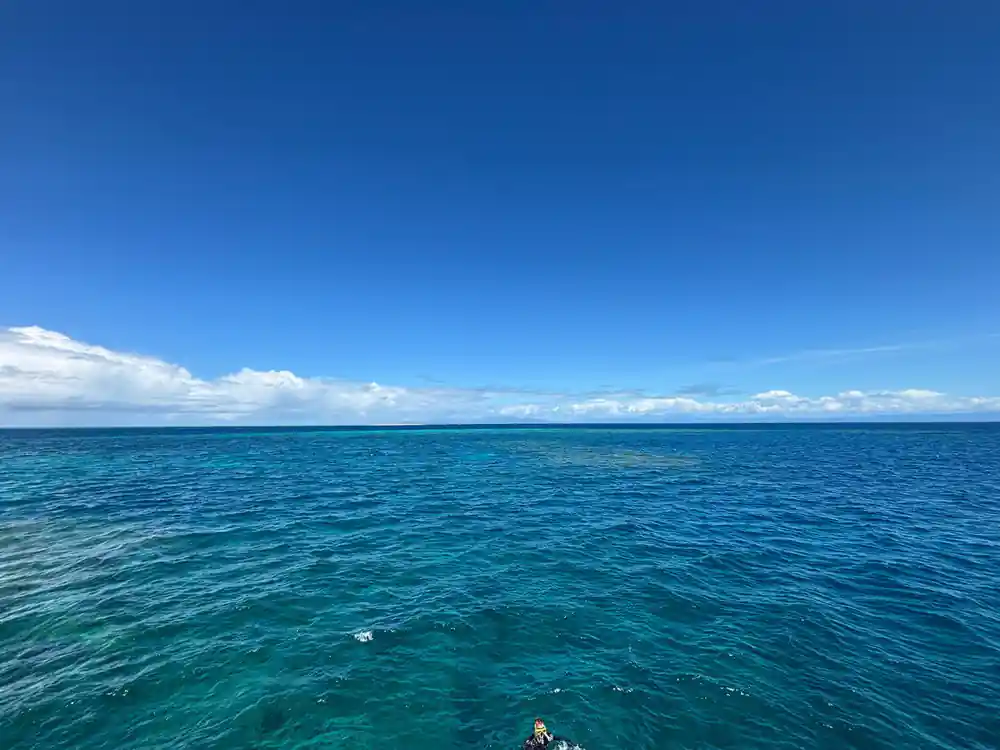
Port Douglas is the launch point for some of the most direct outer reef trips on the Great Barrier Reef. Instead of spending hours sailing to reach the reef, you board a fast catamaran and head out past the patch reefs toward the outer ribbon reefs. Agincourt Reef sits about 39 nautical miles, or 72 kilometres, from Port Douglas, right on the outer edge of Australia's continental shelf.[2] That position matters: the water is clearer, the coral formations are bigger, and the drop-offs are more dramatic than many inshore sites. It is a proper expedition, but it is also the kind of day that stays with you long after you are back on land.
For a full-day outer reef experience, the Outer Barrier Reef Snorkel and Dive Options from Port Douglas is a strong choice. It is a full-day operation with an English-speaking live guide, priced from US$223, and it runs for 7.5 hours.[1] You get the classic outer reef itinerary with snorkelling and diving choices, so you can match the day to your comfort level. Reserve now and pay later, and free cancellation is available up to 24 hours in advance.[1] That flexibility makes it easy to plan around weather and travel schedules.
There is also encouraging news from the reef. The latest AIMS monitoring reports that hard coral cover on the northern Great Barrier Reef increased from 30.0% in 2025 to 35.1% in 2026.[10] No single trip can guarantee a particular sighting, but healthy coral is the foundation that keeps fish life, turtles and reef sharks returning to these waters.
Snorkel or scuba: what to expect
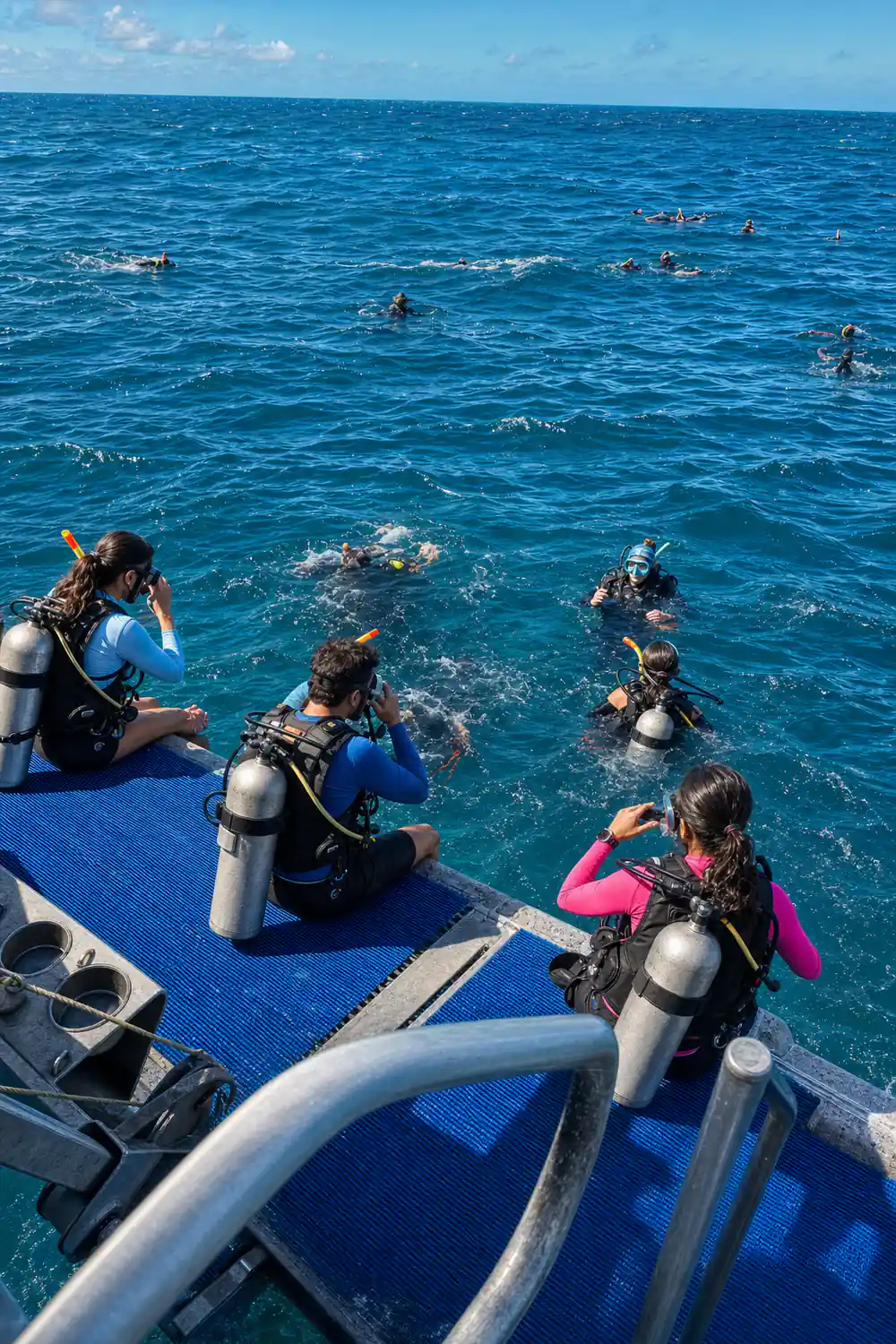
For many people, the first taste of the Great Barrier Reef is from the surface, looking down at coral gardens and fish moving through the shallows. On an outer reef trip like this one, snorkellers usually get several guided sessions with plenty of time in the water. Divers can join introductory or certified dives depending on their experience. If you are new to scuba, PADI's Discover Scuba Diving experience has a maximum depth of 6 meters, or 20 feet, for the initial pool session, and 12 meters, or 40 feet, for an optional open water dive.[11]
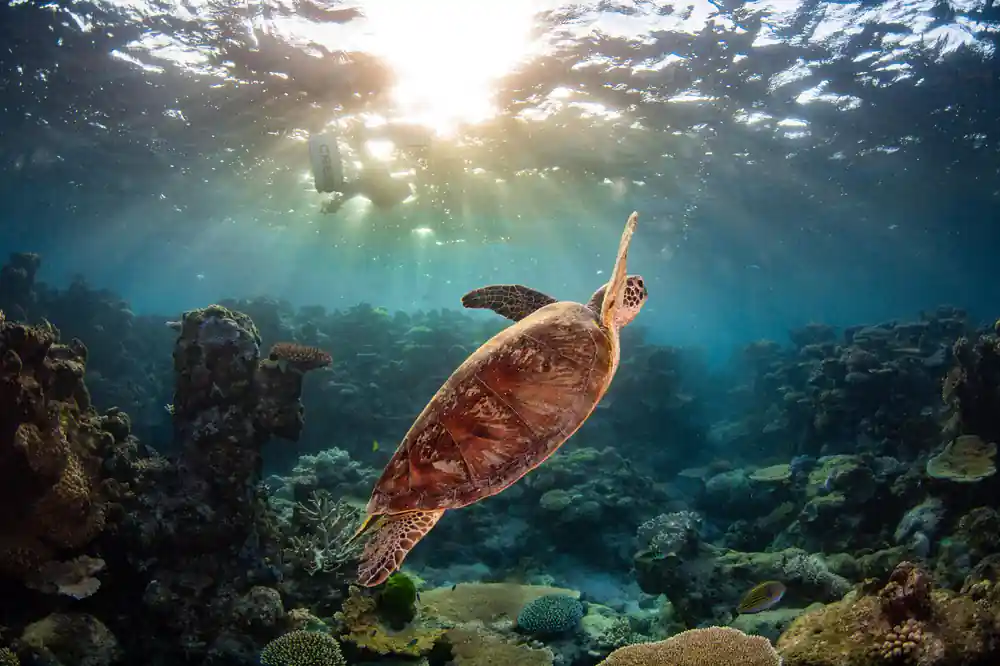
Certified divers can explore deeper walls and bommies, but the real appeal is the sheer richness of the reef. White tip and black tip reef sharks are regularly seen on Cairns outer-reef dive tours, and similar outer reef sites around Port Douglas offer the same kind of wildlife encounters.[12] Keep your mask clear, move slowly, and you are likely to see turtles, parrotfish, and clouds of small silver baitfish.
If you are not sure whether to dive or snorkel, start with a guided snorkel on the first session. You can decide later if you want to try scuba, and the crew is used to helping first-timers get comfortable. The key is to stay relaxed, breathe slowly, and let the reef come to you.

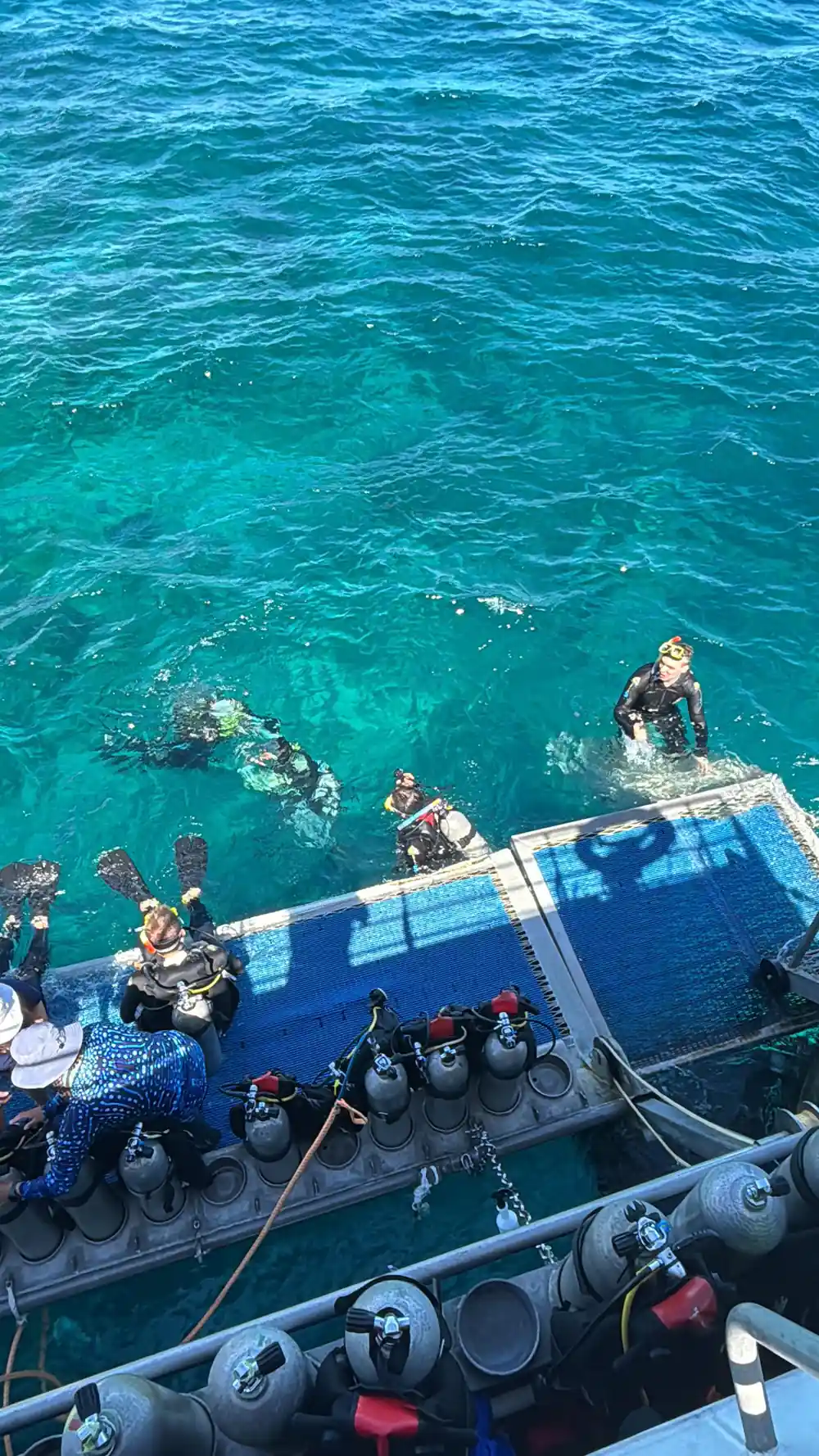
A catamaran moored beside a reef platform on the Great Barrier Reef.
Best seasons for a Port Douglas reef trip
Cairns and Port Douglas have two main seasons. The dry season runs from May to October, bringing sunny skies, low humidity and warm, comfortable days. The wet season runs from November to April, with more heat and humidity and frequent afternoon showers.[13] For divers and snorkellers, water temperature matters more than air temperature. In the Spirit of Freedom dive region on the northern Great Barrier Reef, water temperatures range from 24°C/75°F in winter to 30°C/86°F in summer.[3]
The marine stinger season in tropical Queensland typically runs from November through to May, when the risk from potentially dangerous jellyfish is higher.[4] Operators usually provide stinger suits during these months, so do not skip wearing one. The reef is alive all year, but the dry season offers the most settled weather and the best chance of flat calm seas.
A light wetsuit or stinger suit is enough for most people in tropical waters. If you feel the cold easily, bring a travel wetsuit or ask the operator about rental options. On the boat, tropical breezes can feel cool even when the sun is strong, so pack a warm layer for the ride between reef sites.
How far is the reef from shore?
The Great Barrier Reef is not a single wall of coral a short swim from the beach. It is an enormous system that spans more than 2,300 kilometres along the northeast coast of Australia and is made up of some 3,000 individual coral reefs.[14] From Cairns, a modern, fully-sized catamaran takes about 90 minutes one way to reach the outer reef.[8] From Port Douglas, the route to the outer ribbon reefs is similar in scale, and Agincourt Reef is 39 nautical miles, or 72 kilometres, from town.[2]
Plan for a proper day out rather than a quick boat ride. The recommended Port Douglas tour allows 7.5 hours from start to finish.[1] That includes the journey out, time on the reef, lunch or refreshments, and the return crossing. If you have only a short window, look for half-day options from Cairns, but for the full outer reef experience, give yourself a full day.
For a shorter taste of a coral island, Green Island is 27 kilometres off Cairns and the catamaran crossing takes about 45 minutes.[15] If you are based in Cairns, reef boats depart from the Reef Fleet Terminal at 1 Spence Street, Cairns.[16] That is a convenient base for any reef trip.
from US$223
Book the Port Douglas Outer Barrier Reef Snorkel and Dive Options for a full-day outer reef trip with an English-speaking guide.[1]
What the price includes and the reef tax
The Port Douglas Outer Barrier Reef Snorkel and Dive Options is listed from US$223.[1] As with most reef tours, the price covers the boat, guiding, and the core snorkelling or diving activities. Reserve now and pay later is available, and free cancellation runs up to 24 hours in advance.[1]
On top of the tour price, operators pass on the Reef Environmental Management Charge set by the Reef Authority. It is currently $8.50 per person for reef trips of three hours or more, and $4.25 for shorter part-day trips.[5] The charge goes toward managing the marine park; it is a small part of your day that helps keep the reef protected.
When you compare reef tours, look at the total cost rather than just the headline price. A slightly more expensive trip may add extras like a fuller lunch or a more comfortable catamaran. For many travellers, a higher upfront price is worth it for a smoother day on the water.
Flying after diving: keep it simple
If you are diving on the reef and then flying out of Cairns or Port Douglas, leave a sensible gap between your last dive and your flight. DAN guidelines recommend waiting at least 12 hours after a single no-decompression dive, at least 18 hours after multiple dives per day or multiple days of diving, and 24 hours or more after any dive that required decompression stops.[17]
That means a one-day outer reef dive is usually fine with a next-day flight, but if you do multiple days of diving, build in a surface day before you fly. If you are only snorkelling, there is no decompression concern, although it is still smart to travel rested and hydrated.
Plan your dives at the start of the trip if you know you have a flight at the end of the week. That leaves a comfortable buffer and lets you enjoy the final days without checking the clock. If you are staying at a resort, ask the dive crew to confirm the recommended surface interval for your particular dive profile.
Making the most of your reef day
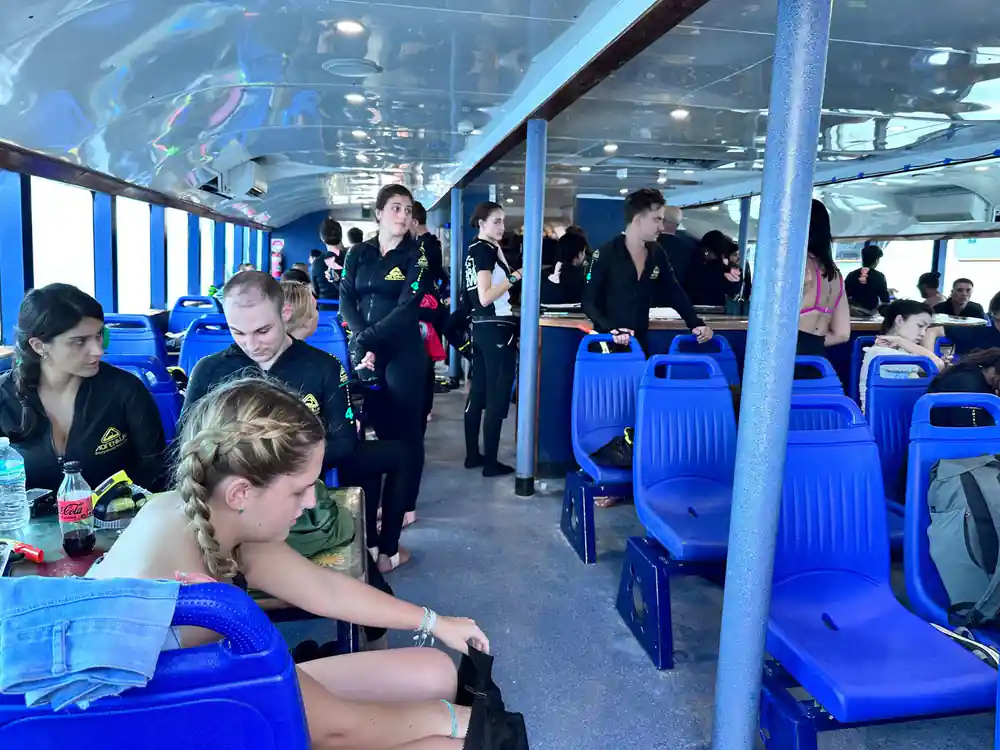
Go early, sleep well, and arrive at the check-in point with sunscreen already on. The boat ride to the outer reef can be lively, so if you are prone to seasickness, take motion sickness tablets before you board. Once you are on the reef, listen to the crew briefings, use the flotation aids if you want them, and stay close to your guide until you feel confident in the water.
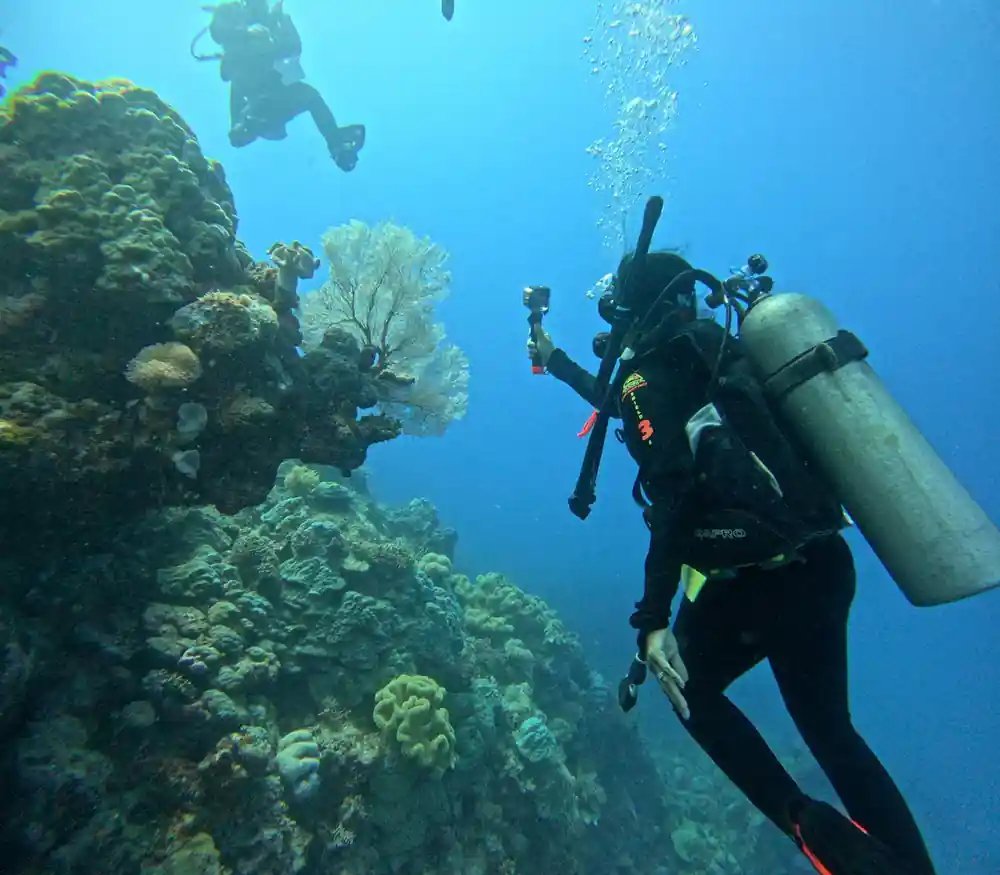
For photographers, a simple waterproof housing or a GoPro on a short stick is ideal. Keep your hands off the coral, never stand on it, and give marine life plenty of space. The Great Barrier Reef is a living system; every responsible visitor helps keep it that way for the next person who drops over the side.
Finally, be patient. The reef changes minute by minute as the tide moves and the light shifts. A quiet moment on the surface can be more memorable than a dozen quick photos, especially when a turtle surfaces beside you or a school of fish turns as one.
Hard coral cover, northern Great Barrier Reef
Northern Great Barrier Reef region-wide average hard coral cover, AIMS monitoring:[10].
Reef tour from-prices in US dollars
From-prices in US dollars from GetYourGuide:[1],[18],[6],[7],[19].
When to book your Port Douglas reef day
Plan your reef day
Choose your date
Dry season months from May to October offer the most settled weather, but the reef runs year-round.[13]
Book with flexibility
Use reserve now and pay later, and remember free cancellation up to 24 hours in advance.[1]
Pack for the boat
Sunscreen, towel, hat, light layer and any seasickness tablets you think you may need.
Get to Port Douglas
Check your operator's check-in instructions and arrive with time to spare before the 7.5-hour day.[1]
Make your dive plan
New to scuba? The introductory experience maxes out at 6 meters in confined water and 12 meters for an open water dive.[11]
Ready to dive the outer reef from Port Douglas?
from US$223