The essentials
- The day trip stops at two Great Barrier Reef sites from Cairns, with a catamaran ride each way and a scuba dive on board.[1]
- Priced from US$196, this all-inclusive listing includes an English-speaking instructor and allows cancellation without charge up to 24 hours before.[1]
- A pontoon sits 47 km offshore at the Outer Reef.[2]
- Hard coral coverage along the northern Great Barrier Reef climbed from 30.0% in 2025 to 35.1% in 2026.[3]
- Dry season lasts from May to October, while wet season falls roughly between December and March. Stinger season typically runs November through May.[4][5]
- Top choice Best Value All-inclusive from US$196 Duration1 day[1]Rating4.51 from 456 reviews[1]SuitsTwo-reef itinerary with scuba dive Check availability
- Outer and Coral Cay Cruise from US$202 Duration8.5 hours - 1 day[6]Rating4.81 from 1,592 reviews[6]SuitsCoral cay and outer reef combo See this tour
- Premium Snorkel and Dive from US$179 Duration9 hours[7]Rating4.70 from 878 reviews[7]SuitsReef, snorkel and culture mix See this tour
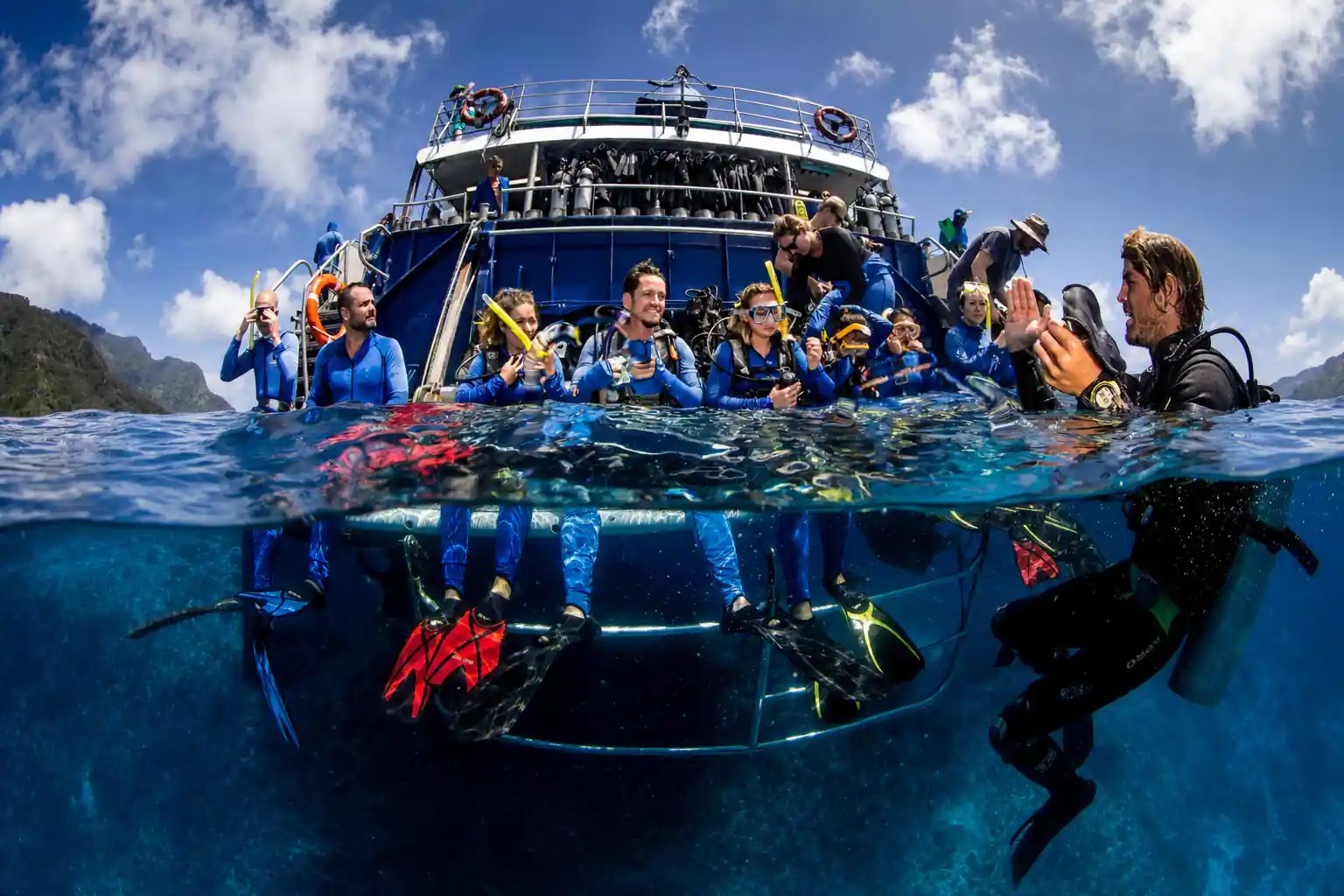
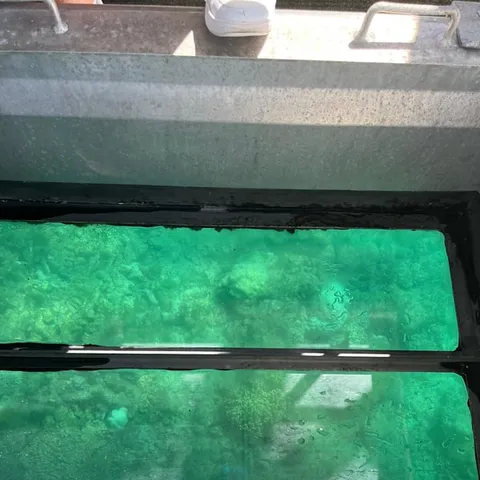
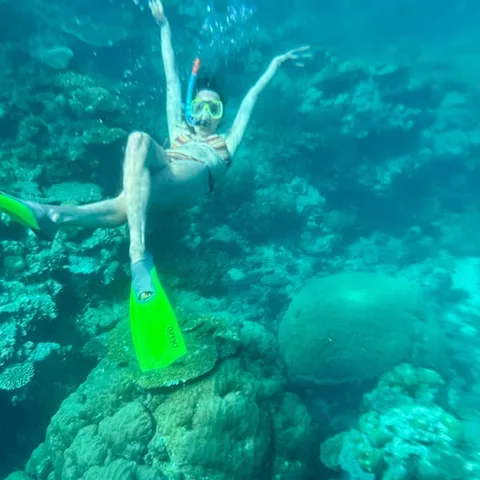
Sunlover’s Moore Reef pontoon sits 47 km offshore on the Outer Reef
Our take: a solid two-reef day from Cairns
Before setting off
Two Stops, Not One
Most one-day reef trips from Cairns spend the whole day at a single pontoon or mooring. This one is different. The itinerary is built around two Great Barrier Reef stops, with the catamaran heading out and back on the same day.[1] That simple structure makes the day feel less like a long wait at one mooring and more like a proper reef exploration.
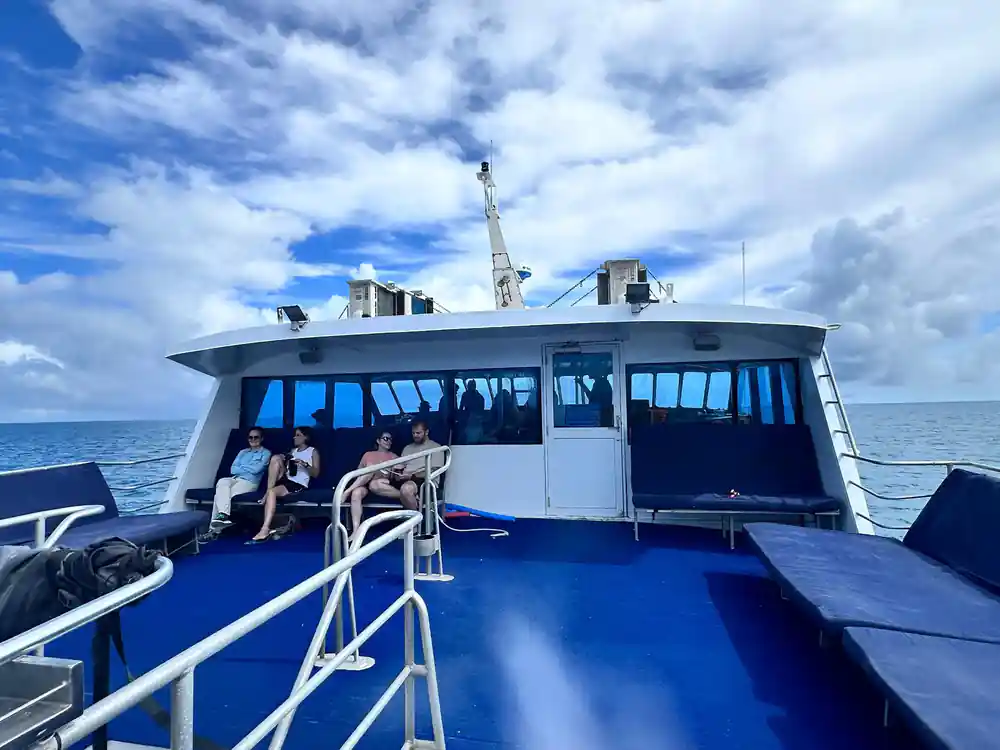
From Cairns, the outer reef is a long way out; an outer reef pontoon sits 47 km offshore.[2] That puts you off the coast and into clearer water, where the reef structure is more dramatic and the marine life is often more abundant. It also means you have time to settle in, get a coffee, sort your gear and watch the water change colour as the boat leaves the harbour behind.
More than 2,300 kilometres of the northeast coast of Australia are lined by the Great Barrier Reef, a huge system composed of some 3,000 separate coral reefs.[11] With two stops, you get a small taste of that variety in a single day. Each site has its own coral formations and its own mood, so you come away with a much better sense of what the reef actually is.
Why the Two Sites Aren't Named in Advance
Don't expect a printed list of reef names when you book. The two sites for this trip are selected on the day, and that is actually a good thing. Reef tour operators in the Marine Park hold permits for a network of locations and pick the best options based on weather, currents and visibility. You are not getting a fixed route; you are getting the best version of the route the day can offer.
Conditions on the reef can change quickly. A site that was calm yesterday can be choppy by mid-morning, and a skipper who knows the area will move you to a spot where you can safely get in the water. The trade-off is that you won't know your exact coordinates until the crew decides, but the plan is always to give you two solid stops with good snorkelling and diving.
This doesn't mean it is random. The day is planned around two reef stops, and the crew will talk through the plan as you cruise out. If you have questions about current, depth or what you are hoping to see, ask them early. The more they know about your experience level, the easier it is for them to make good calls when they are choosing the sites.
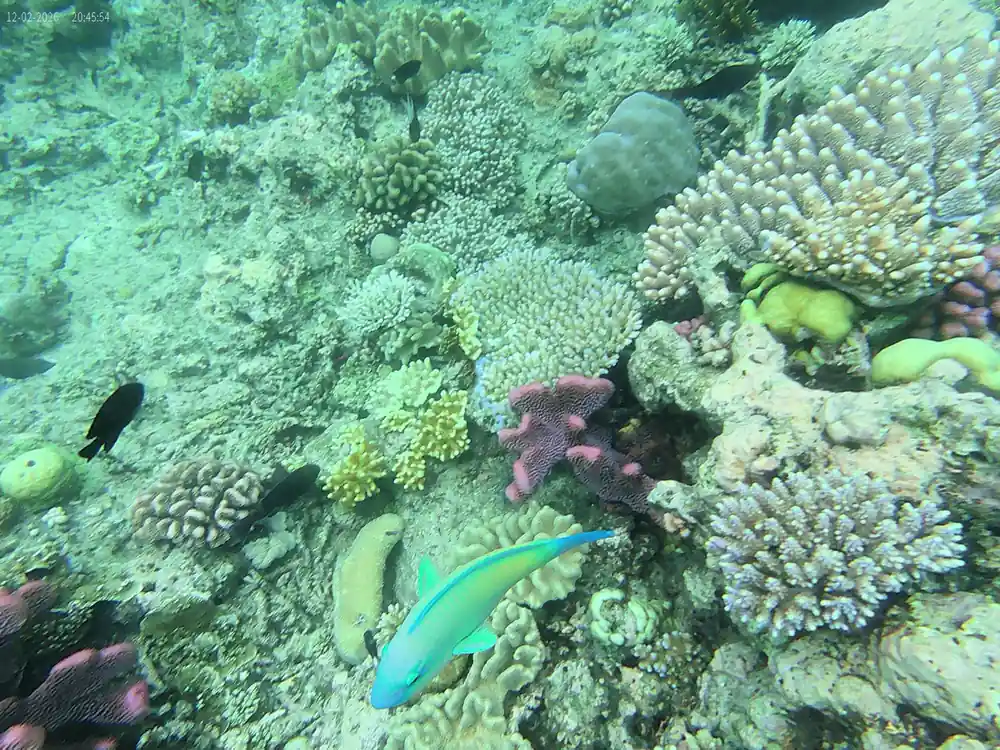
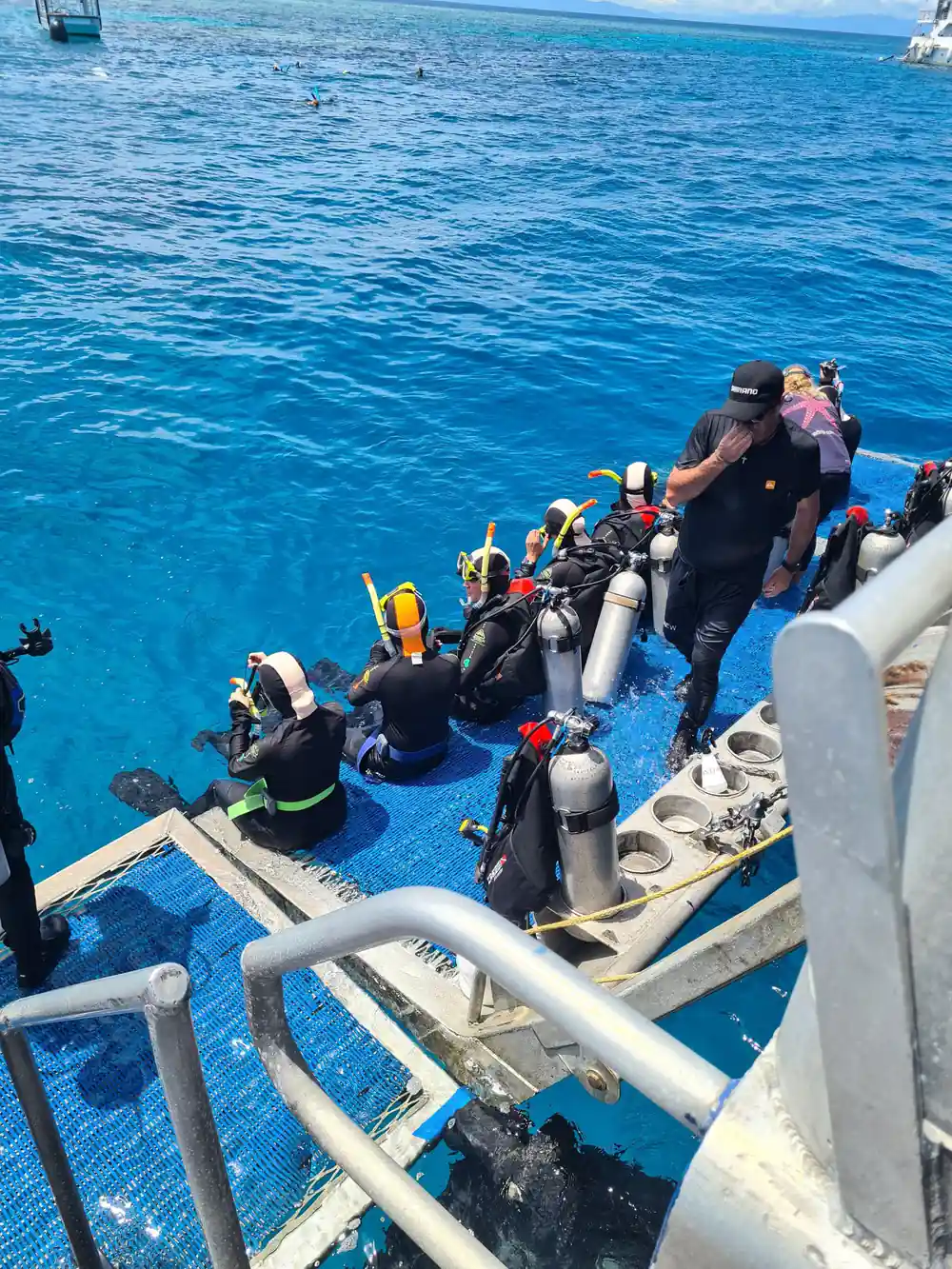
The catamaran moors at the first of two outer reef stops for a day of diving and snorkelling.
How the Choice Gets Made
The crew looks at weather, tides and the way the sea is behaving, and they also listen to the boats already on the water. Marine stingers are part of the picture too. In tropical Queensland, the marine stinger season usually lasts from November through May, a period when dangerous jellyfish pose a greater risk.[5] During those months, your tour operator will hand out protective suits or tell you what to wear before you get in.
On the reef near Cairns, water temperatures sit at roughly 29°C during summer (December-February) and 24°C during winter (June-August).[8] In winter, a thin wetsuit or stinger suit is welcome; in summer, you will probably want the lightest layer you can get. Knowing the water temperature helps you pack the right gear and plan how long you will want to stay in.
Reef trips are also subject to the Reef Environmental Management Charge, currently $8.50 per day for a full-day passenger.[10] Check whether this is added to your fare or folded into the price when you book, so there are no surprises at the terminal.
What Happens at Each Site
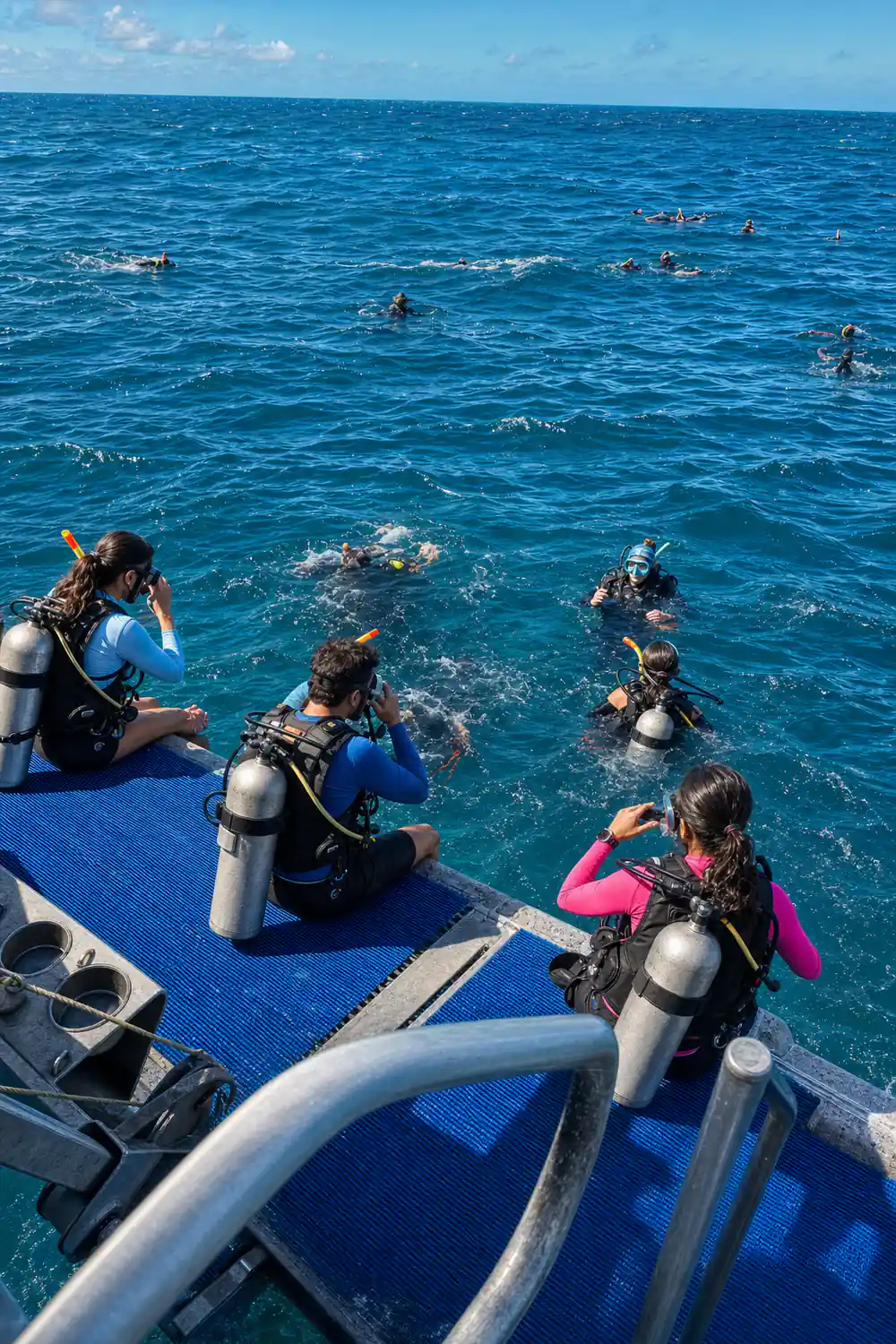
The shape of the day is simple: cruise out, moor at the first reef, get in the water, then move to the second reef and do it again.[1] An English-speaking instructor is on board to help with the scuba diving.[1] Whether you are a certified diver or trying it for the first time, there is someone to guide you through the kit and the entry.
If this is your first time diving, you're not expected to know anything in advance. For a Discover Scuba Diving experience, the maximum depth is 6 meters (20 feet) in the initial pool session and 12 meters (40 feet) for an optional open water dive.[12] On the reef, you will stay well within comfortable limits and the crew will keep an eye on you throughout the dive.
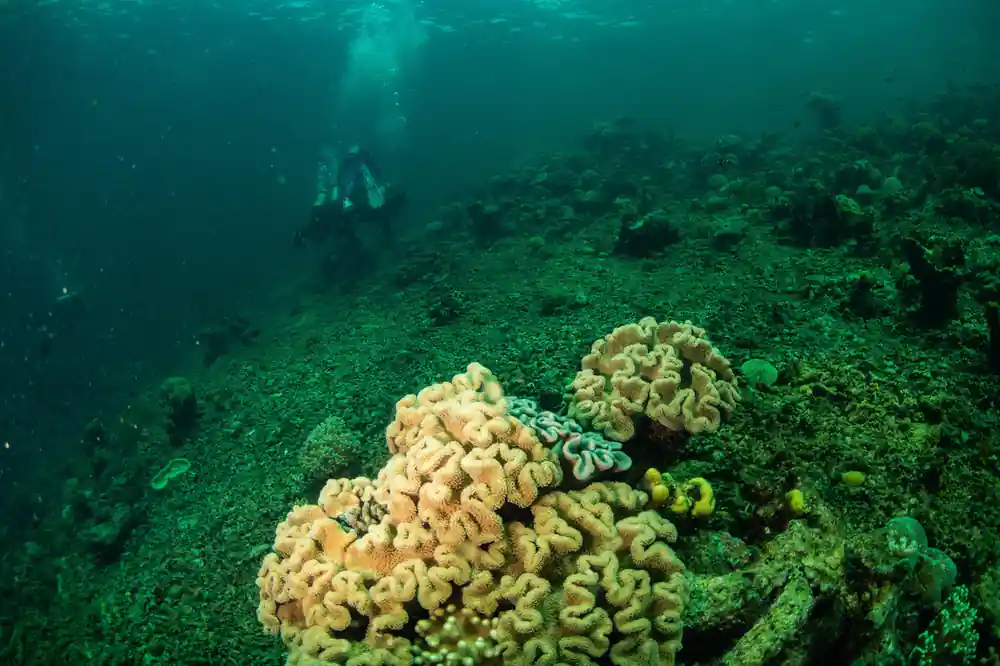
Marine life is the main event. The reef system is home to over 1,600 species of fish and over 600 species of corals.[13] Between stops, you can watch fish swirl around the anchor line, or simply lie back and enjoy the warmth. Turtles, clams and colourful reef fish are the sort of sightings that make the day memorable.
from US$196
Book the all-inclusive two-reef day with scuba dive from Cairns, with free cancellation up to 24 hours ahead[1].
How Different the Two Sites Feel
The two stops are usually quite different in character. The first might be a broad coral garden with shallow sandy patches, where snorkellers can float easily and divers can hover over bommies. The second might be a wall or a channel with a little more current and bigger fish. The crew chooses the sites on the day, and part of the adventure is not knowing exactly what to expect.
Variety is the point. If the first site is busy or the current picks up, the second site gives you a reset. You can plan to dive at one site and snorkel at the other, or do both at both. Either way, two stops means you are not betting your whole day on one patch of reef. Hard coral coverage along the northern Great Barrier Reef climbed from 30.0% in 2025 to 35.1% in 2026.[3]
Take time to notice the small differences between the two sites. The water colour, the coral shapes, the way the sand moves and the fish species you see can all shift in the short trip between moorings. It is a reminder that the Great Barrier Reef is not one uniform place, but a collection of living habitats.
Quiet Depends on the Day You Get
Crowds on the reef depend less on the tour and more on the day. School holidays and the dry season bring more boats; a midweek morning in the shoulder season can feel almost private. The nature of a two-stop trip means you will share the water with your own boat group and sometimes with others at a busy reef, but the second stop often lightens the load.
The dry season lasts May to October and features sunny skies, modest humidity, and warm, pleasant days.[4] The wet season, roughly December to March, is hot and humid, with frequent afternoon showers that keep the rainforest lush.[4] If you want the calmest water for diving, aim for the dry season. If you want fewer crowds and don't mind a shower in the afternoon, the green season can still deliver excellent reef days.
Stinger suits become part of the dress code from November through May.[5] Even when the water is warm, they add a layer of reassurance. They are not a big deal once you are in, and they mean you can focus on the fish instead of worrying about what is swimming past.
Planning Your Outer Great Barrier Reef Scuba Diving Day
Begin at the Reef Fleet Terminal, 1 Spence Street, Cairns, the departure point for reef boats.[9] Plan to arrive with time to check in, use the facilities and find your boat. If it is your first dive, let the crew know when you check in so they can keep an eye out for you and help you get comfortable in the water.
Reserve now and pay later; if your plans shift, you may cancel at no cost up to 24 hours beforehand for a full refund.[1] That gives you room to book ahead in the busy season and still stay flexible. Think about your own energy too: a full day on the water is wonderful, but it can be tiring, so give yourself an easy evening after the trip.
One final planning note: if you are flying after a single no-decompression dive, leave a minimum preflight surface interval of 12 hours.[14] Don't book a flight the same evening and expect to feel fresh. A relaxed night on the ground is the safest way to end a reef day.
Distance from shore to reef destinations
Green Island is 27 km off Cairns[15], Agincourt Reef is 39 nautical miles (72 km) from Port Douglas[16], and Hardy Reef is about 80 km east of Airlie Beach.[17]
Compare day trip prices from Cairns
Amounts are from-prices in US dollars from GetYourGuide listings:[1][6][7][18].
When to book
How to plan your reef day
Book your spot
Make a reservation now and pay later; you can cancel for free up to 24 hours ahead.[1]
Get to the terminal
Check in at the Reef Fleet Terminal, located at 1 Spence Street, Cairns.[9]
Ride to the outer reef
The catamaran heads out from Cairns to the reef.[1]
Dive or snorkel at stop one
Get in the water with the English-speaking instructor and enjoy the first site.[1]
Move to stop two
The day continues to a second Great Barrier Reef site for more time in the water.[1]
Plan your no-fly time
Leave at least 12 hours after a single no-decompression dive before flying.[14]
Book your outer Great Barrier Reef scuba diving day from Cairns now.
from US$197Reserve now & pay later