The essentials
- Many day trips from Cairns let you snorkel and try a beginner scuba dive on the same boat. The all-inclusive trip booked from this site is one of them.
- Underwater, scuba lets you hover close to coral walls and follow fish at eye level. You can swim deeper than a snorkeller and feel the reef's scale from the inside.
- Snorkelling is simple, light and free. You float on the surface, breathe through a tube and watch reef life beneath you without tanks, weights or training.
- If you are nervous underwater, dislike ear pressure or just want a relaxed day in the sun, snorkelling is the sensible choice. It suits most ages and fitness levels.
- A Discover Scuba experience suits steady swimmers who are comfortable in the water and curious to see the reef from below. It works as a first taste of diving.
- Top choice Best Value Reef Trip from US$196 Duration1 day[1]Rating4.51 from 456 reviews[1]SuitsFirst-timers who want snorkel, dive and inclusions in one day Check availability
- Coral Cay Snorkel and Dive from US$202 Duration8.5 hours to 1 day[2]Rating4.81 from 1,592 reviews[2]SuitsSnorkellers and divers who like a coral cay stop See this tour
- Snorkel, Dive and Culture from US$179 Duration9 hours[3]Rating4.70 from 878 reviews[3]SuitsTravellers who want a cultural layer with their reef time See this tour
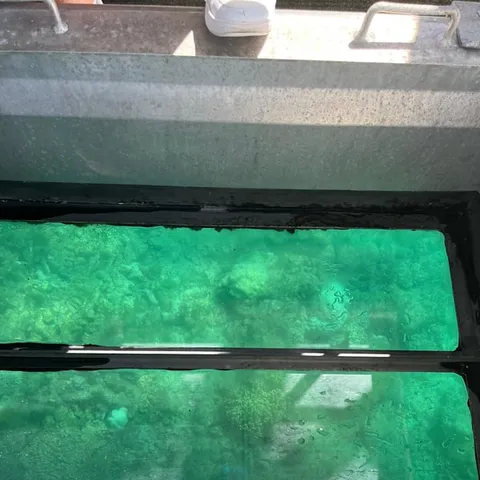
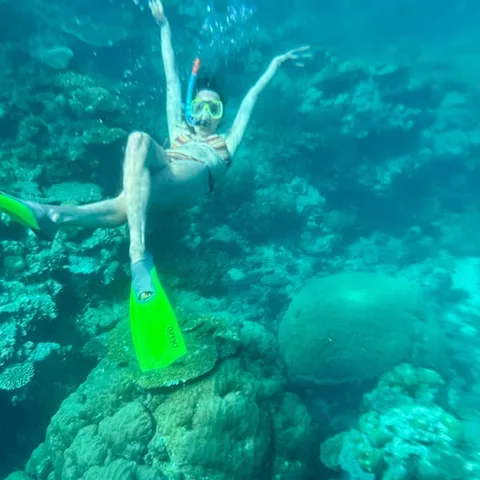
For a single no-decompression dive, the recommendation is a minimum preflight surface interval of 12 hours.
Choose scuba if you want depth, choose snorkel if you want ease
Getting ready
- Wear a rash shirt, hat and reef-safe sunscreen
- Bring a light towel and a warm layer for the boat ride
- Check your booking confirmation for pickup and check-in details
- Book ahead in peak season to secure your spot
On the day
- Arrive at the Reef Fleet Terminal in Cairns for check-in
- Listen to the crew's safety briefing before entering the water
- Tell your instructor if you have any medical conditions
- Leave time after diving before any scheduled flight
You do not have to choose
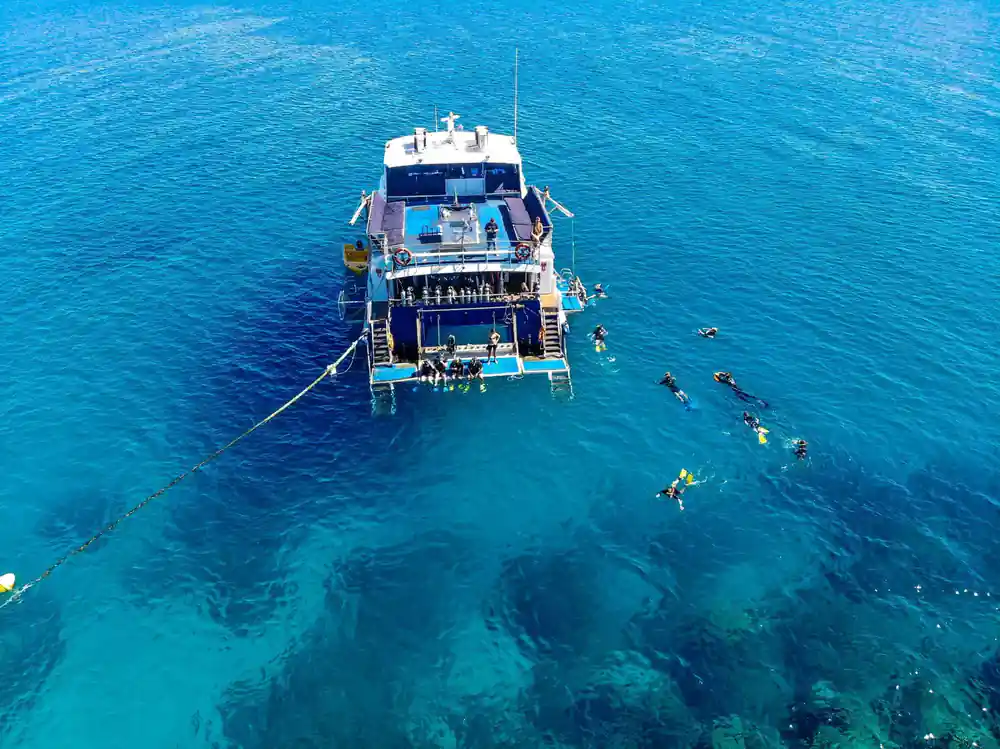
The great barrier reef scuba or snorkel question is really a question about how you want to see the reef. On a typical day trip from Cairns, you might start with a snorkel over a sandy patch of coral, then join a small group for a guided scuba dive. You can spend the morning floating on the surface and the afternoon breathing underwater, all from the same catamaran. The reef is enormous, stretching more than 2,300 kilometres along Australia's northeast coast and containing some 3,000 separate coral reefs, so every boat has ample water to choose from.[4] Many travellers simply wait until they are on board and let the crew guide them.
The tour booked from this site, the Cairns Best Value All-inclusive Reef Trip With Scuba Dive, is built around that idea. It runs for 1 day, costs from US$196, and includes a scuba dive as part of the package.[1] The boat sails from Cairns to the Great Barrier Reef, where you can choose how much time to spend above and below the surface. A full day gives you room to ease in slowly. You can start with a snorkel, watch others dive, then take your turn when ready. The crew are used to first-timers.
What diving shows you
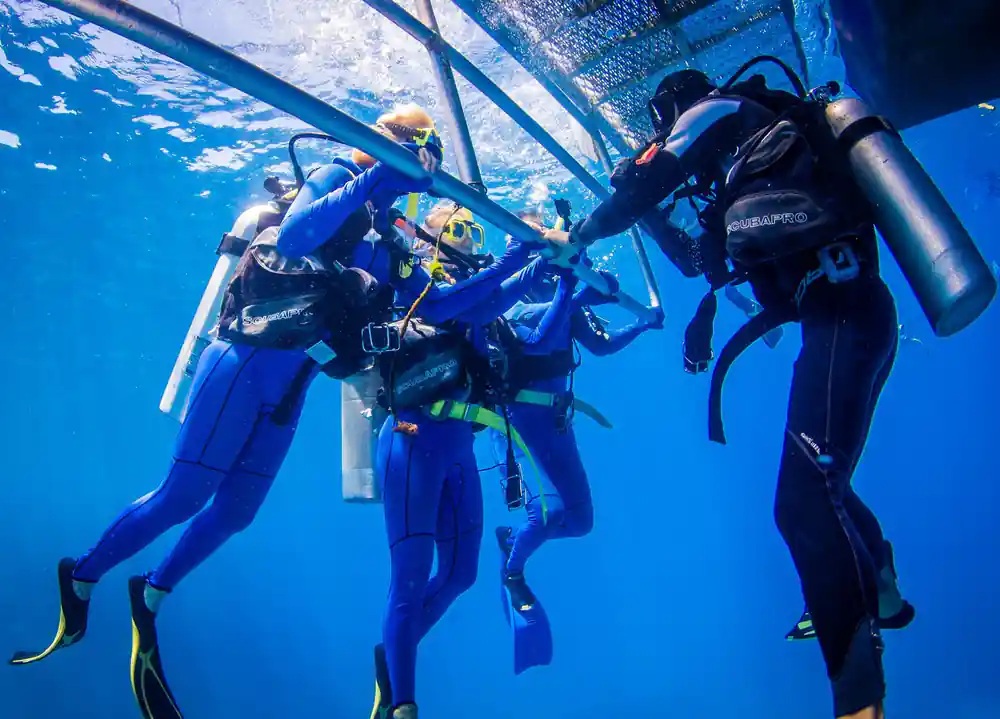
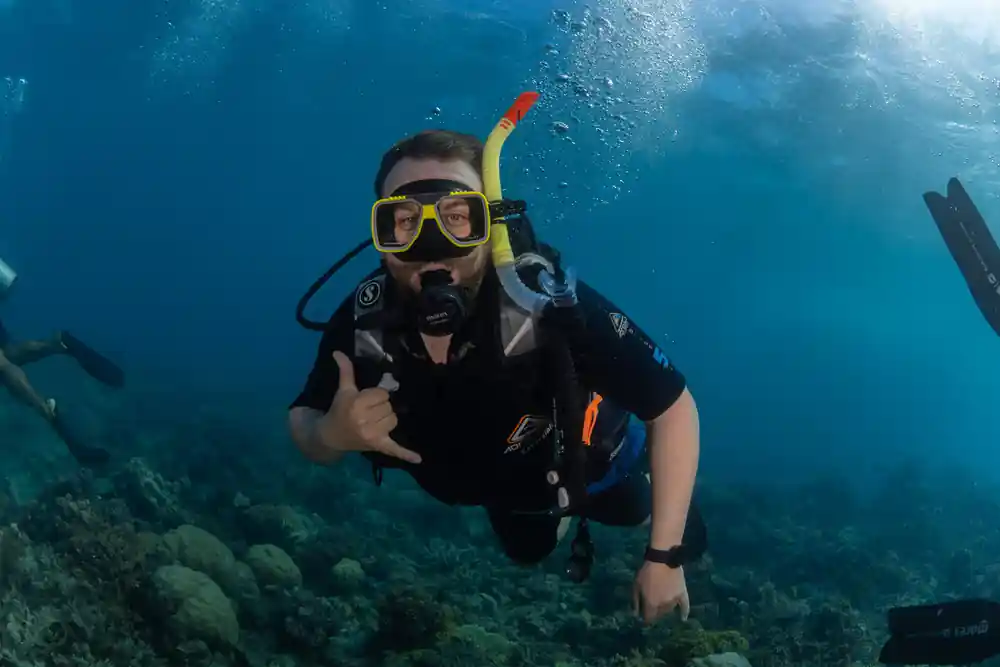
Scuba diving changes the scale of the reef. Instead of looking down from above, you sink slowly beside coral bommies and hover at eye level with schools of fish. You feel the water around you and hear your own breathing, a steady rhythm that makes the reef feel calm and enormous. Colours look different from below. Sunlight filters through the surface, catching the edges of coral plates and the silver flanks of trevally as they circle. Divers notice small details surface viewers miss: the pulse of a giant clam, the dart of a cleaner wrasse, the shadow of a shark along the sand.
If you are new to diving, a Discover Scuba experience keeps things simple. The maximum depth for a Discover Scuba Diving experience is 6 meters (20 feet) for the initial pool session and 12 meters (40 feet) if you do the optional open water dive.[5] On a day trip, that usually means a short training session on the boat before you descend with an instructor close by. You learn a few hand signals, practice breathing through the regulator on the surface, and then follow your instructor down at a gentle pace. Some divers on outer reef trips also spot reef sharks gliding over the sand below, though no sighting is guaranteed.
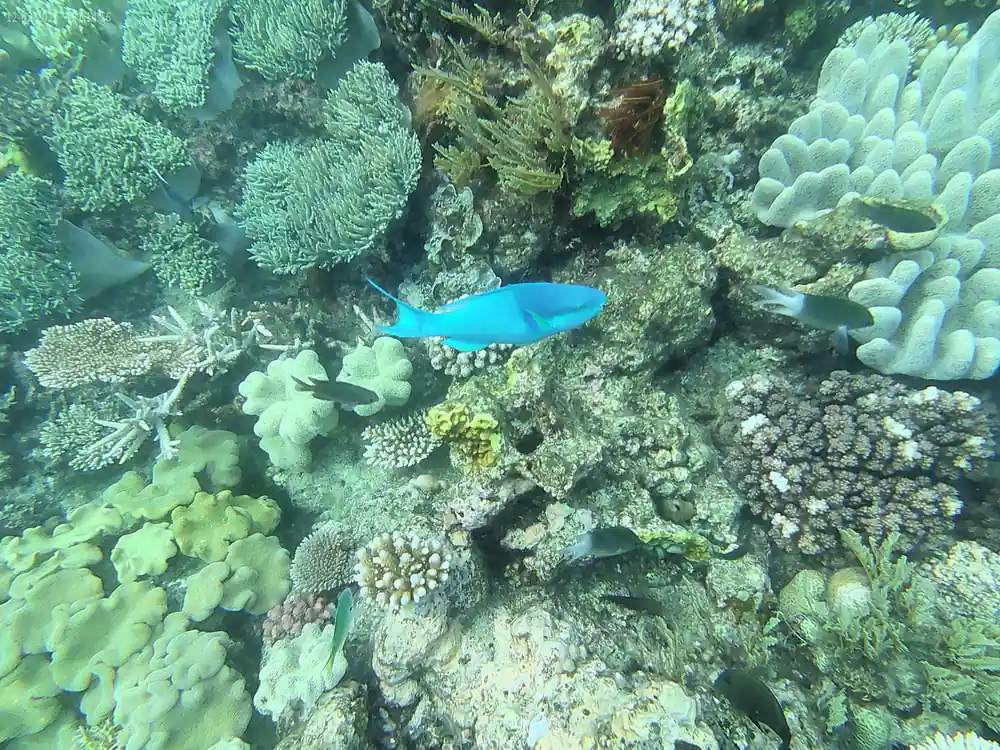
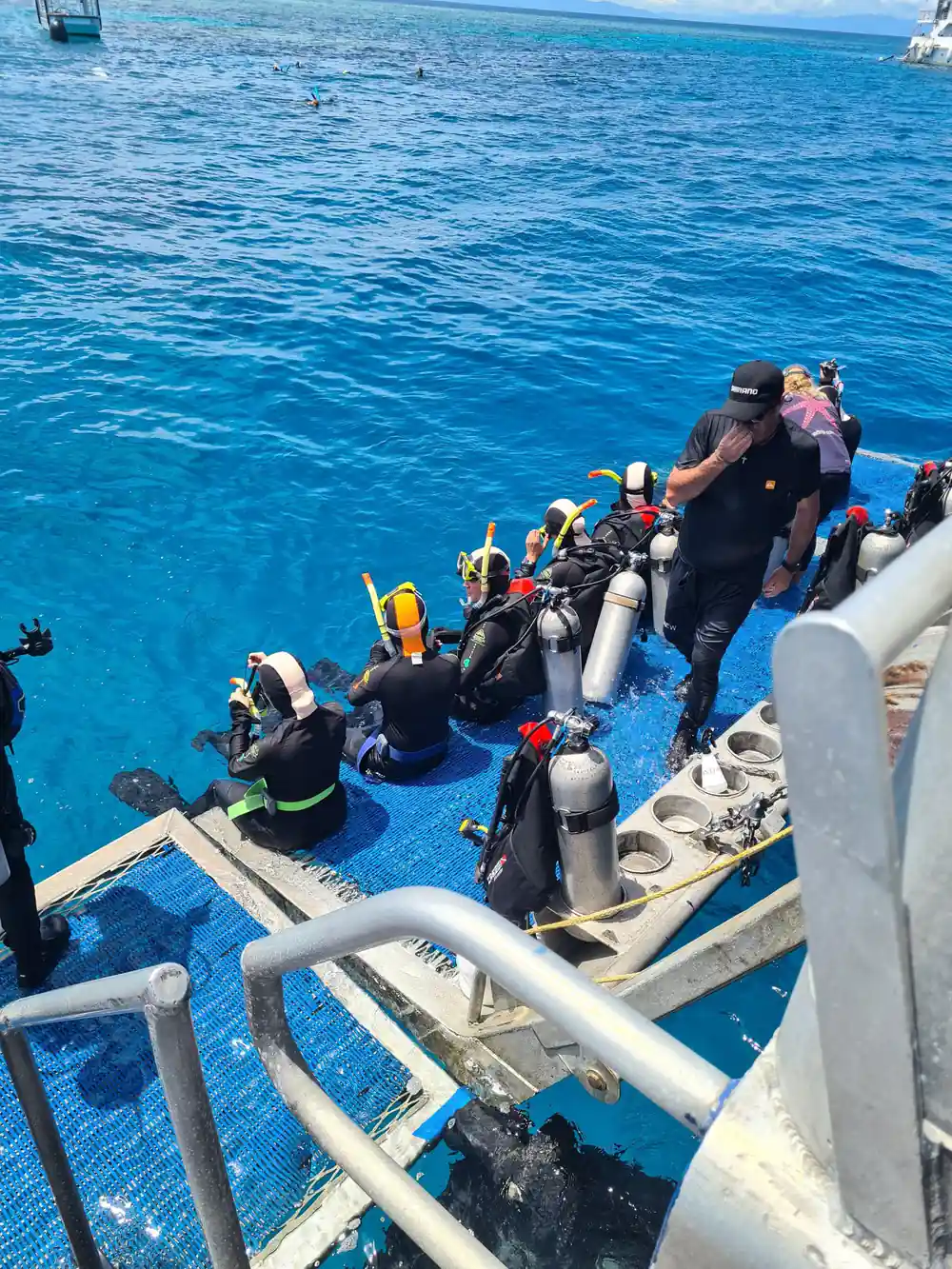
A crew member helps a guest into the water beside a moored reef platform.
What snorkelling gives you instead
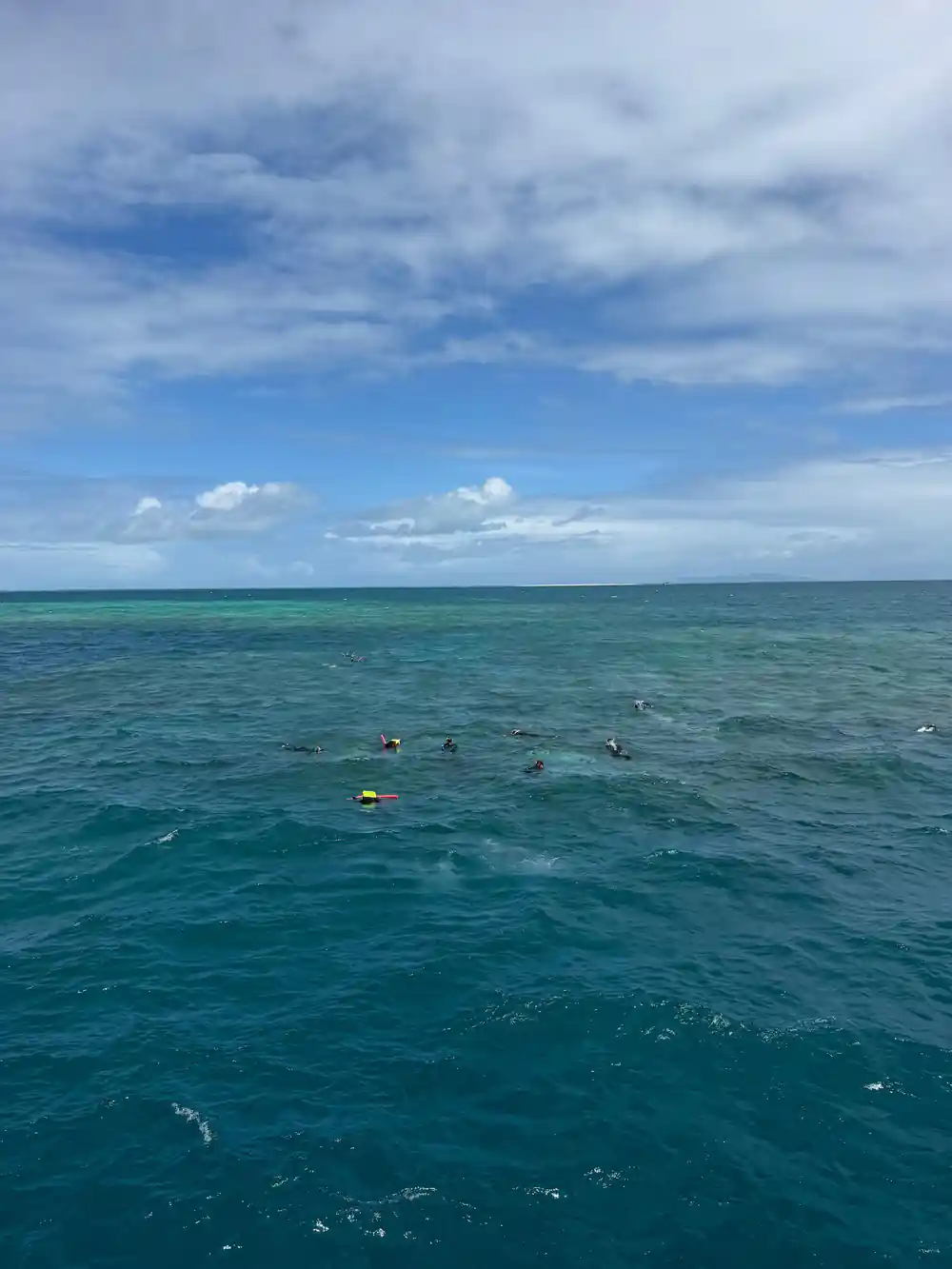
Snorkelling has a lower barrier to entry. You put on a mask, fins and a snorkel, then float face down and let the current carry you over the reef. It is quiet, simple and easy to do for long stretches without getting cold or tired. You can hold your breath and duck down to peek under a coral ledge, or simply drift and watch the light play on the sand. Because you stay at the surface, there is no need to equalise pressure in your ears and no tank to carry. It suits all ages and you can learn the basics very quickly.
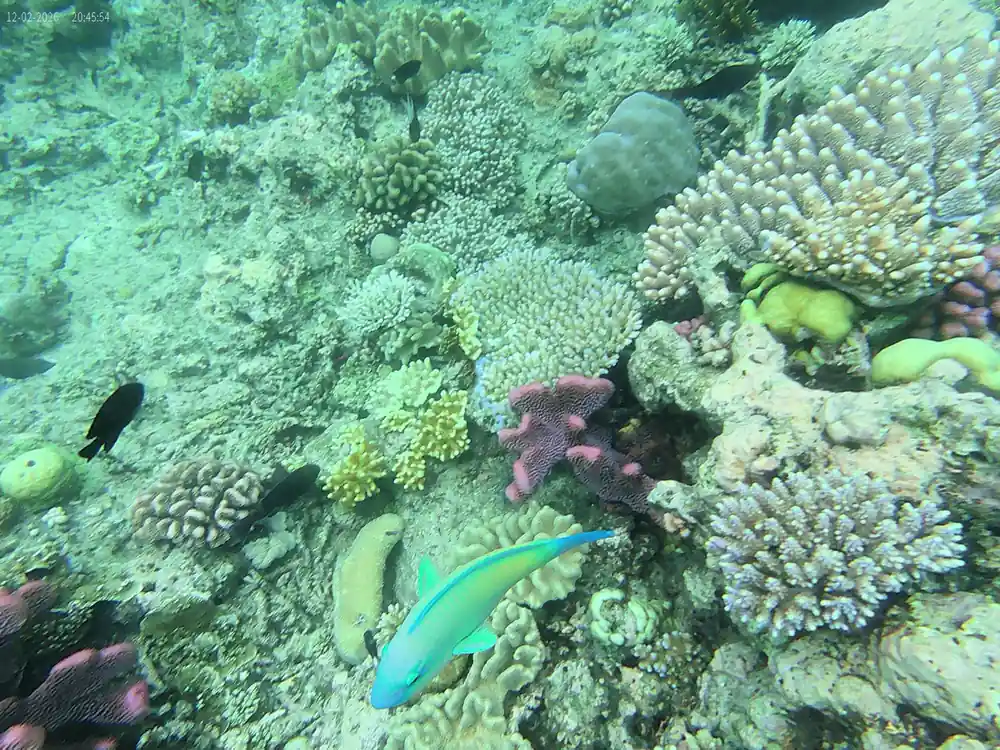
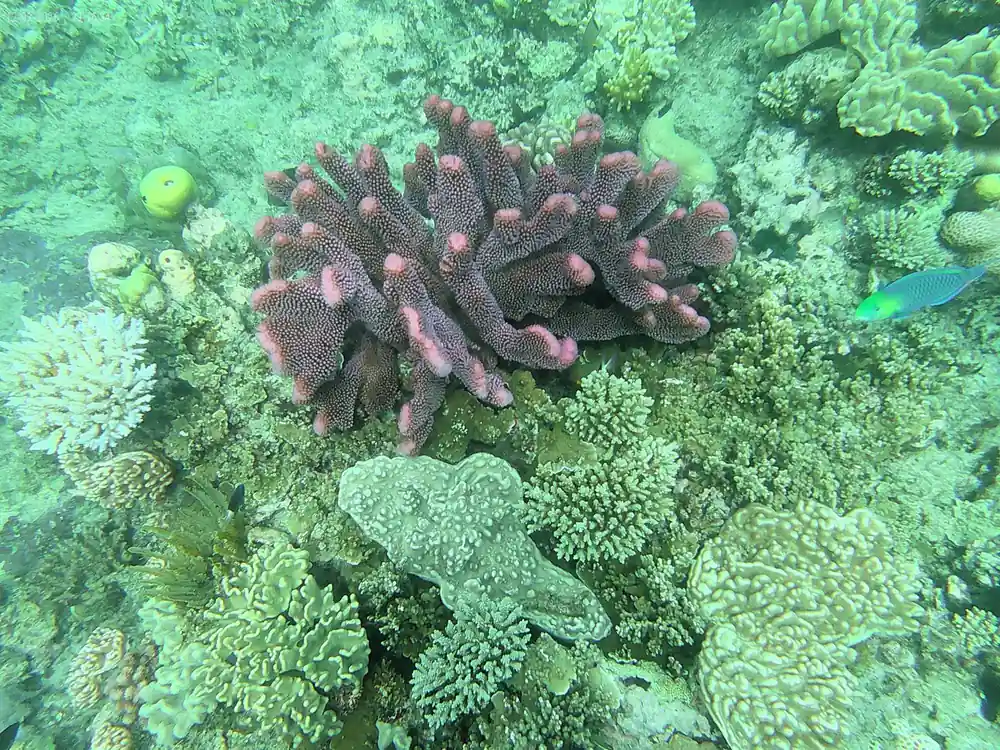
The same reefs that divers visit are often just as rewarding from the surface. In clear water, you can see branching corals, parrotfish, clownfish and sometimes turtles cruising below. If you choose a tour with a coral cay stop, you can wade from the beach into shallow water and watch the reef appear beneath you without any gear except your mask. Snorkellers also get to move freely, following a turtle along the edge of a bommie or hovering over a garden of staghorn coral while the current does the work. On sandy lagoon stops, you can stand up whenever you want, rinse your mask and swap stories with the crew before rolling back in for another pass.
Who should stay on the surface
Snorkelling is a better fit if you are nervous about being underwater, have sinus or ear trouble, or simply want a relaxed day in the sun. There is no equipment to learn, no pressure to descend, and you can lift your head and breathe whenever you like. On a boat with multiple reef stops, you can spend as much or as little time in the water as you like, then rest on deck and enjoy the view. The surface is also where you see the reef from a wider angle. Looking down from above, you notice the shapes and patterns of the coral, the shadows of fish, and the way the reef edge drops away into blue. You can take photos, keep an eye on friends, or just listen to the water against the hull.
Younger children and weaker swimmers also tend to do well with snorkelling, especially in sheltered sandy areas. Many reef trips from Cairns visit places where the water is calm and shallow enough for beginners. If you are not sure, ask the crew for a flotation aid and stay close to the boat. Ask for a well-fitting mask, and the crew will gladly adjust your gear until it fits. The key is to relax: breathe slowly through the snorkel, keep your face in the water, and remember that you can raise your head any moment. A little floating time usually turns nervous excitement into pure enjoyment.
from US$196
The all-inclusive catamaran reef trip from Cairns with scuba dive starts at this price and runs for a full day on the water.[1]
Who the dive suits
The dive suits steady swimmers who feel comfortable in open water and want to see the reef from below. An instructor leads the session, explains hand signals and basic ear clearing, and stays with you throughout the dive. If you can swim and stay calm in the water, you already have the basic skill. The instructor handles the complex parts like buoyancy control, leaving you free to focus on what is in front of you. You will spend time at a shallow depth first, practising until you feel at ease before moving deeper.
It also suits travellers who want a richer sense of the reef. On an outer reef trip, you might drop beside a wall of coral, swim through a channel between bommies, and see species that stay deeper than snorkellers usually reach. The all-inclusive trip booked from this site is a practical way to try both in a single outing: snorkel first to build confidence, then dive with the instructor when you are ready. There is a particular stillness underwater. Reef sounds come through as clicks and pops, and your own breathing becomes a steady companion. For many first-timers, that calm, weightless feeling is why they travel across the world to dive.
Making the most of the day
Start by choosing a tour that gives you time at several reef stops. A longer day on the water means more chances to find the right conditions for diving and snorkelling. The trip from this site runs for 1 day[1], while similar cruises such as the Cairns Outer and Coral Cay Snorkel and Dive Cruise run for 8.5 hours to 1 day and cost from US$202.[2] The Cairns Great Barrier Reef Premium Snorkel, Dive and Culture tour costs from US$179 and runs for 9 hours.[3] Look at what is included before booking. A longer trip also gives a buffer if weather changes the morning conditions.
From Cairns, one popular Outer Reef destination is Sunlover's Moore Reef pontoon, which sits 47 km offshore.[6] By contrast, Green Island sits 27 kilometres east of Cairns; reaching it by boat takes about 45 minutes.[7] If you want a shorter boat ride, a half-day snorkel tour from Cairns costs from US$125 and runs for 4 hours.[8] Plan to arrive at the terminal with time to spare. From Cairns, reef boats leave the Reef Fleet Terminal on 1 Spence Street[9], and busy mornings cause lines at check-in. A calm start makes the day easier, especially with kids.
Planning around the seasons
Cairns has distinct seasons. Roughly May to October is the dry season, whereas the wet season lasts from December to March and brings warm to hot, humid conditions, with possible thunderstorms and tropical cyclones.[10] Both seasons can work well for reef trips, but the dry season often means calmer seas. The wet season has its own appeal: the rainforest is green, and storms usually pass quickly. If your dates are flexible, let operators guide you toward the calmest sites.
Be aware of marine stingers between November and May.[11] Wearing a stinger suit or a rash shirt is a sensible precaution during those months. Off Cairns, reef water averages 24°C during winter (June to August) and 29°C during summer (December to February).[12] A thin wetsuit or stinger suit can keep you comfortable in winter and protect you from the sun in summer. Whichever season you pick, pack a dry change of clothes and a hat.
From-prices for popular Cairns reef trips
Values from GetYourGuide listing facts:[1],[3],[2],[8],[13].
Compare reef trip from-prices
US dollar from-prices from GetYourGuide listings:[1],[2],[3].
When to book your reef day
Plan your reef day
Choose your tour style
Pick a trip that offers both snorkelling and a Discover Scuba dive so you can decide on the water. The all-inclusive tour from this site is one such option.
Check the logistics
From Cairns, reef boats leave the Reef Fleet Terminal, located at 1 Spence Street.[9] Give yourself enough time to check in and pick up rental gear.
Pack light
Bring swimwear, a towel, sunscreen and a rash shirt. Leave valuables on shore or in a dry bag on the boat.
Listen to the briefing
The crew will explain safety, snorkelling zones and how the scuba session works. Ask questions if you are unsure.
Start with snorkelling
Get comfortable in the water first. Float over the coral, spot fish, and build confidence before deciding whether to dive.
Try the dive if you are ready
With an instructor beside you, you can discover the reef from below. Remember to allow time after diving before any flight.
Ready to see the Great Barrier Reef from above and below?
from US$197Reserve now & pay later