The essentials
- Each operator sets minimum ages for scuba diving, so confirm with the company before booking. The featured trip is a one-day catamaran cruise from Cairns.[1]
- A medical questionnaire is standard for scuba diving. Be honest about conditions and medications, and ask for a doctor's clearance when needed.
- A Discover Scuba Diving session limits beginners to 6 meters (20 feet) in a pool and 12 meters (40 feet) in open water.[2]
- The full-day trip reaches the Great Barrier Reef twice; snorkellers and divers share the same day on the same catamaran.[1]
- Up to 24 hours before the featured tour starts, you can cancel at no cost and receive a full refund.[1]
- Top choice All-inclusive Reef Trip from US$196 Duration1 day[1]CancellationFree cancellation up to 24 hours[1]LanguageInstructor: English[1]Rating4.51 from 456 reviews[1] Check availability
- Outer & Coral Cay Cruise from US$202 Duration8.5 hours - 1 day[3]CancellationFree cancellation up to 24 hours[3]LanguageInstructor: English[3]Rating4.81 from 1,592 reviews[3] See this tour
- Premium Snorkel & Dive from US$179 Duration9 hours[4]CancellationFree cancellation up to 24 hours[4]LanguageLive tour guide: English[4]Rating4.70 from 878 reviews[4] See this tour
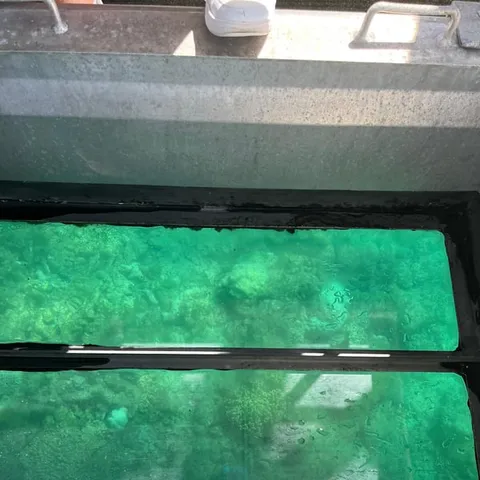
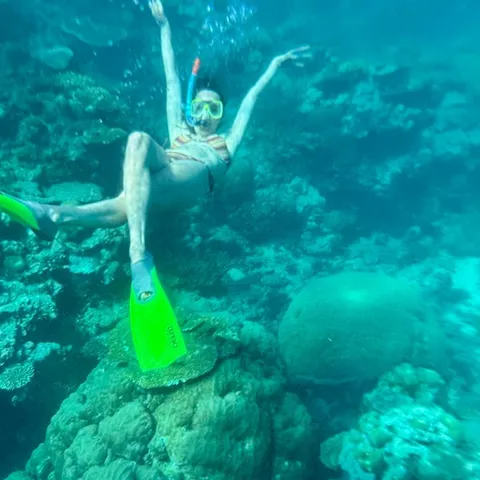
The maximum depth for a Discover Scuba Diving experience is 6 meters (20 feet) for the initial pool session and 12 meters (40 feet) if you do the optional open water dive, but that does not mean you have to go that deep.
A Mix-and-Match Reef Day That Keeps Everyone Onboard
Things to check
The Age Limit Is for the Dive, Not the Day
If someone in your group is too young to scuba dive, or simply not keen to try it, the day can still be a shared reef day. The age rule applies to the scuba part of the trip, not to the boat or the water. On the Best Value All-inclusive Reef Trip booked through this site, you join a catamaran for a one-day cruise and visit the Great Barrier Reef twice.[1] The boat is the base for everyone: a diver can drop below the surface while a partner or child snorkels nearby, and you still come back to the same deck for lunch.
The trip is led by an English-speaking instructor; the briefings, the gear checks and the first few minutes underwater are all handled by someone whose job is to keep things simple.[1] For a first dive, shallow water is the point. A Discover Scuba Diving session has a maximum depth of 6 meters (20 feet) in the initial pool session and 12 meters (40 feet) for an optional open water dive.[2]
If you are travelling with mixed ages and abilities, choose a reef day that leaves room for both activities. The featured tour runs for one day, which is enough time to get to the reef, spend time in the water at two reef stops and still be back in Cairns the same evening.[1]
Young Divers Need a Parent or Guardian
Dive operators decide minimum ages for their own boats, courses and insurance, so confirm the exact number with the company before you book. The industry pattern is simple: a young person's first scuba experience happens with a parent or guardian close by. That adult is not expected to dive, but they are expected to sit through the briefing, sign the paperwork and stay on the boat or in the water nearby while the instructor leads the dive.
If you are planning for a school-age traveller, ask for the age and consent policy at the same time as you book. The featured one-day reef trip is not a certification course; it is an all-inclusive day at the reef with scuba diving, and the family conversation can be about trying something new rather than taking on a multi-day commitment.[1]
The best family days are the ones where no one is left out. On this catamaran trip, the route is Catamaran, Great Barrier Reef, Great Barrier Reef, Catamaran: two reef stops where the boat, not the shore, is your home base.[1]
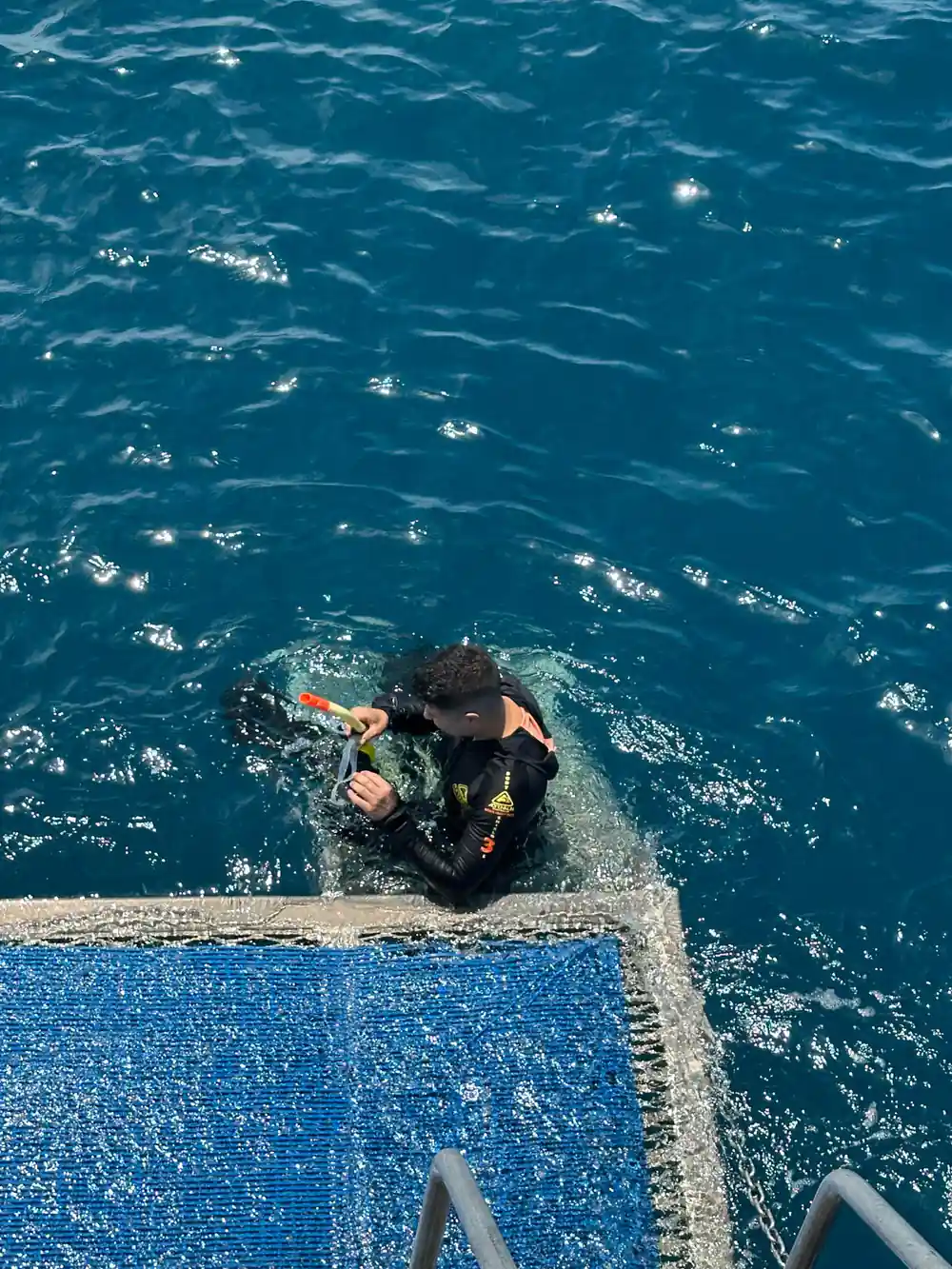
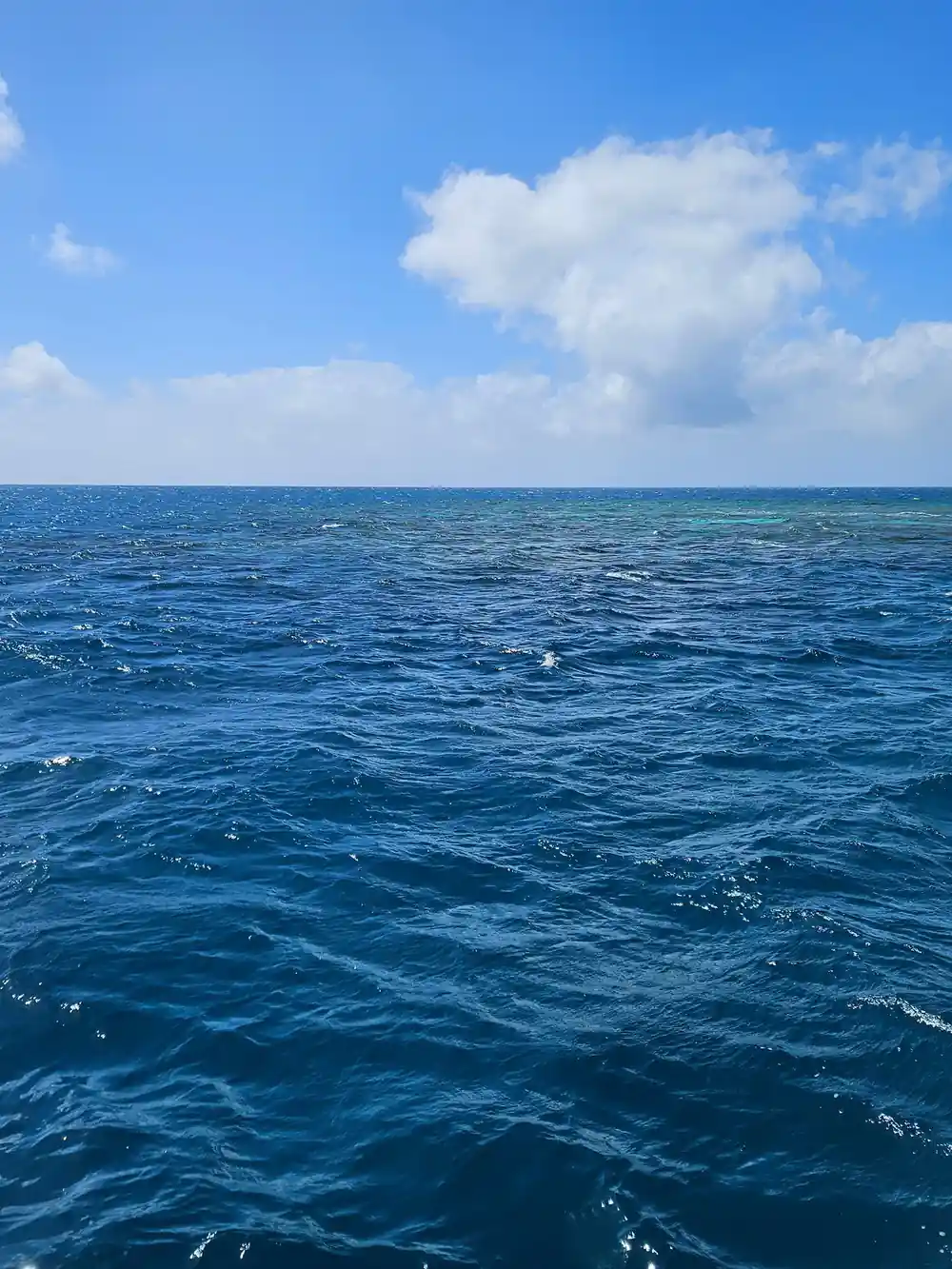
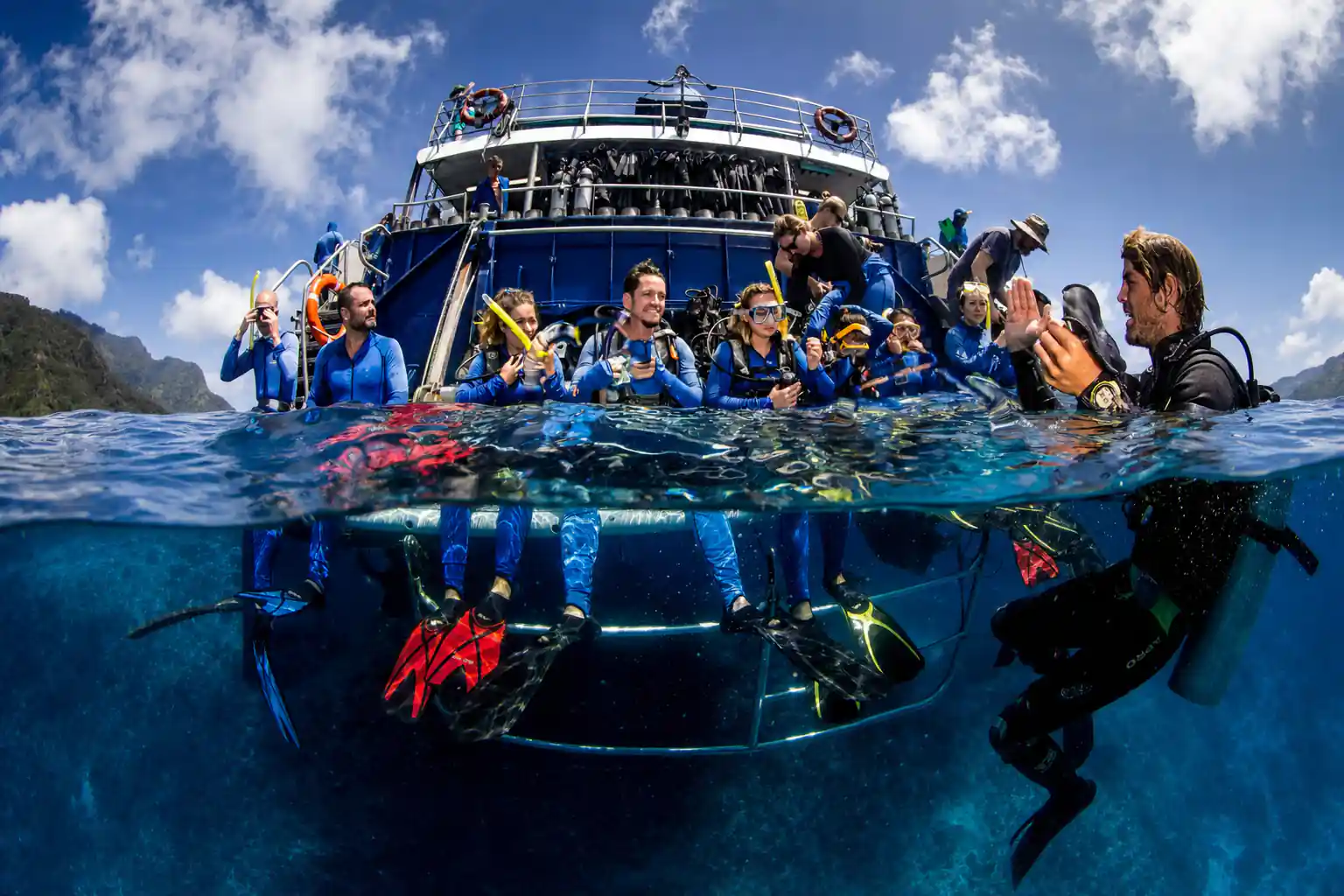
A catamaran moored beside the reef as swimmers and divers explore the clear water.
Teenagers Need Written Consent
Once a young diver is old enough to take part, many operators still ask for written consent from a parent or guardian. This is separate from the medical form, and it normally arrives as part of the booking confirmation. The consent form makes clear who is responsible and what the adult understands about the dive, including the depth limits of an introductory scuba experience.
Ask for the form before you travel, fill it in with the same details that appear on passports, and carry it to check-in. At 1 Spence Street, the Reef Fleet Terminal is where Cairns reef boats leave from; last-minute queries about medications or consent can also be raised there.[6] A photo of the signed form on your phone is useful for the quick check-in at the terminal.
If the diver is staying with one parent while the other is not travelling, check whether the operator needs a notarised note or extra identification. Policies vary, so it is better to ask when you book than to discover an issue at the terminal.
Certified Divers Show Proof, Not Age
Certified divers need to show their certification card or a digital copy when checking in. The crew wants to see your certification level, recent experience and comfort in the water, not a birth certificate. If you have not dived for a while, tell the dive desk; they may suggest a refresher or a shallow guided dive to ease you back in.
For anyone planning to fly after diving, the timing matters. For a single no-decompression dive, the recommended minimum preflight surface interval before flying is 12 hours.[9] Build that buffer into the end of your trip; if your flight is early the next morning, treat the final day as a snorkel day.
A certified diver can also use the same one-day reef trip from Cairns as a relaxed way to keep a partner or family member happy; while they dive, you can snorkel the same reef sites or explore the water around the catamaran.[1]
from US$196
From Cairns, a one-day catamaran cruise visits two Great Barrier Reef stops with an English-speaking instructor and free cancellation up to 24 hours prior.[1]
What an Introductory Dive Actually Involves
An introductory dive is a guided first taste of scuba, not a certification. You practise the basics in shallow water first, then follow an instructor into the open water. A Discover Scuba Diving session has a maximum depth of 6 meters (20 feet) in the initial pool session and 12 meters (40 feet) for an optional open water dive, but a first dive rarely needs to go that deep.[2]
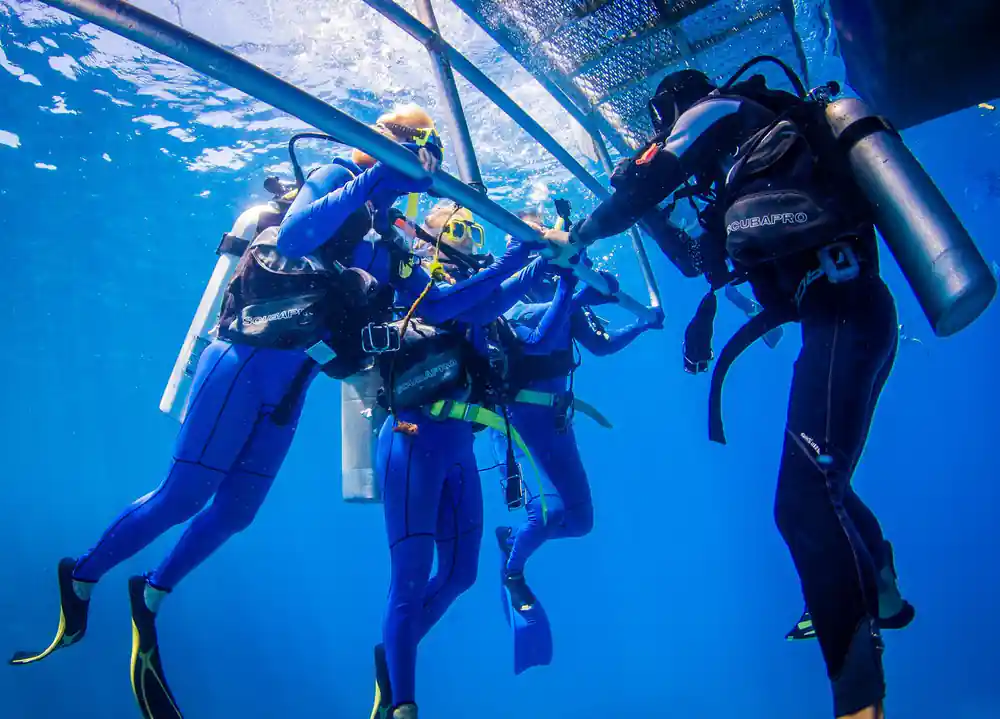
No previous scuba experience is needed, but you do need to be comfortable in the water and honest on the medical form. The featured tour from Cairns uses an English-speaking instructor, and the briefing, the hand signals used underwater and the buddy checks are all explained clearly.[1] You travel to the reef on the same catamaran that stays with you for the day, which gives you time to get ready on the way out.[1]
Underwater, you will use simple cues, clear your mask, breathe normally and stay close to the instructor. The goal is to make the Reef feel accessible, not to test endurance. After a dive, you can warm up on deck, have lunch and decide whether to go in for another snorkel before the boat heads back.
Medical Conditions and Medications Can Rule Out Diving
Scuba diving changes the pressure around the body, and operators take medical questions seriously. The questionnaire asks about asthma, heart conditions, diabetes, epilepsy, ear or sinus problems, recent surgery, pregnancy and prescription medications. Some conditions mean you can dive with a doctor's clearance; others are a firm no. The form is not a suggestion, it is a safety screen.
Do not assume a common medication is fine just because it is prescribed for daily life. The diving environment can change how the body responds to medicine, and operators ask for details rather than a simple yes or no. If you are unsure, send the operator a photo of your medication list before you book.
For young divers, the parent or guardian is usually the person signing the medical form, so read it slowly and list every condition. If a condition needs professional advice, ask your usual doctor or a dive medicine specialist before you arrive. It is better to delay a dive than to discover a problem underwater.
If You Don't Dive, Snorkelling Is the Way In
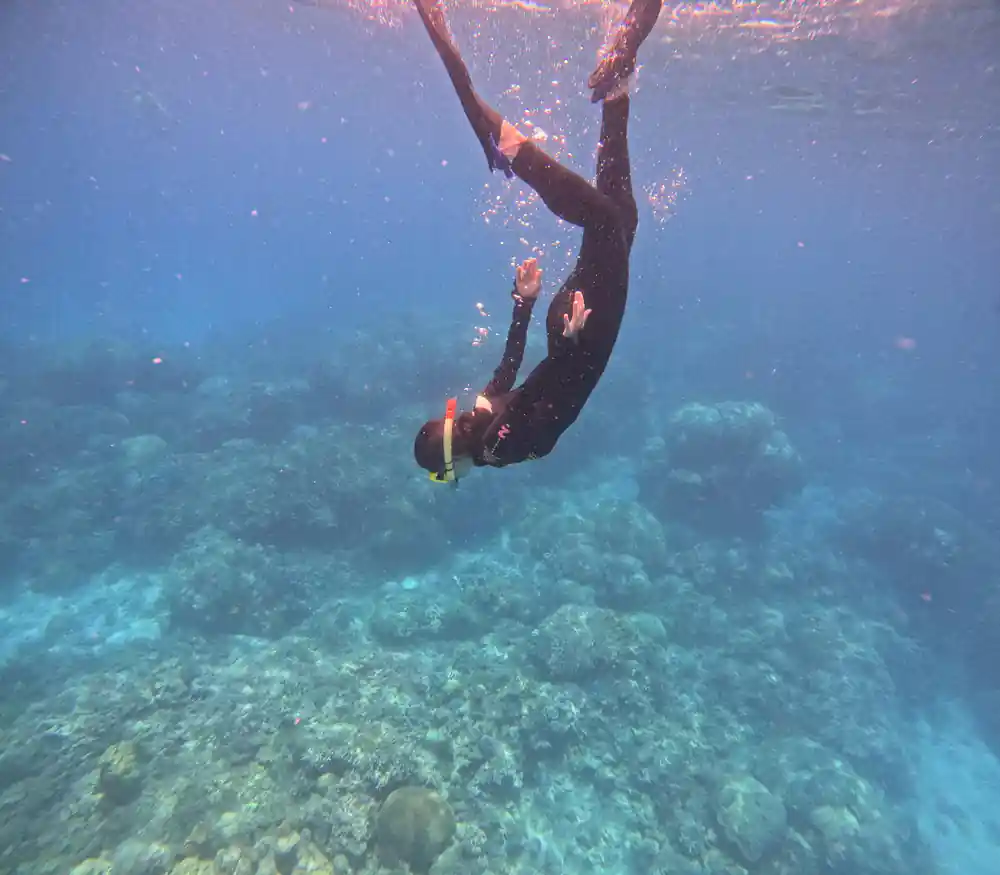
Snorkelling is the easiest way to enjoy the Great Barrier Reef without any dive certification. You float face down, breathe through a tube and let the coral come to you. On a full-day reef trip from Cairns, a catamaran takes you out to the reef, and once the boat stops, the water is right there.[1]
The featured tour reaches the Great Barrier Reef twice, and snorkellers get two chances to get in and explore.[1] When marine stinger season is active, usually November through to May, dangerous jellyfish pose a greater risk, so wear a stinger suit and heed the crew's guidance.[8] Off Cairns, the reef's water averages 29°C from December to February and 24°C from June to August; a light wetsuit or rash vest suits most people.[7]
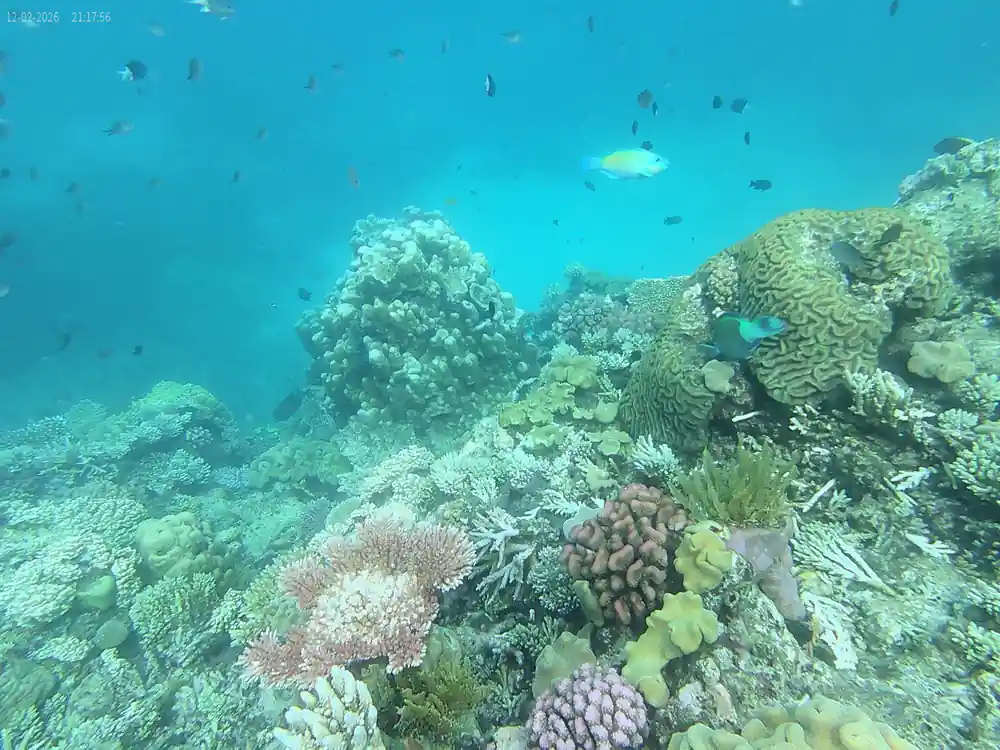
Snorkelling doesn't require strong swimming skills, but you should be at ease with your face underwater and can float in a life jacket if you like. The Reef itself is vast, stretching more than 2,300 kilometres and assembled from some 3,000 individual coral reefs.[10] No one sees all of it in one day, which is part of the delight: every stop offers something slightly different.
Distance or Span on the Reef
Compare Costs by Dive Experience
GetYourGuide from-prices in USD for tour listings[14],[1],[15],[16].
When to book and dive
Plan Your Day
Confirm age and consent
Ask the operator for the minimum age, consent forms and medical questionnaire before you finalise travel.
Fill in medical forms
Answer every question honestly and get doctor clearance if any condition applies. Keep a signed copy on your phone.
Choose dive or snorkel
Decide who wants to dive and who prefers to snorkel. The featured trip has two reef stops in one day.[1]
Book with flexibility
Make a booking with no-cost cancellation up to 24 hours ahead; reserve now and pay later.[1]
Arrive at the terminal
Cairns reef boats leave the Reef Fleet Terminal at 1 Spence Street.[6]
Reserve your all-inclusive Cairns reef day with free cancellation
from US$197Reserve now & pay later